


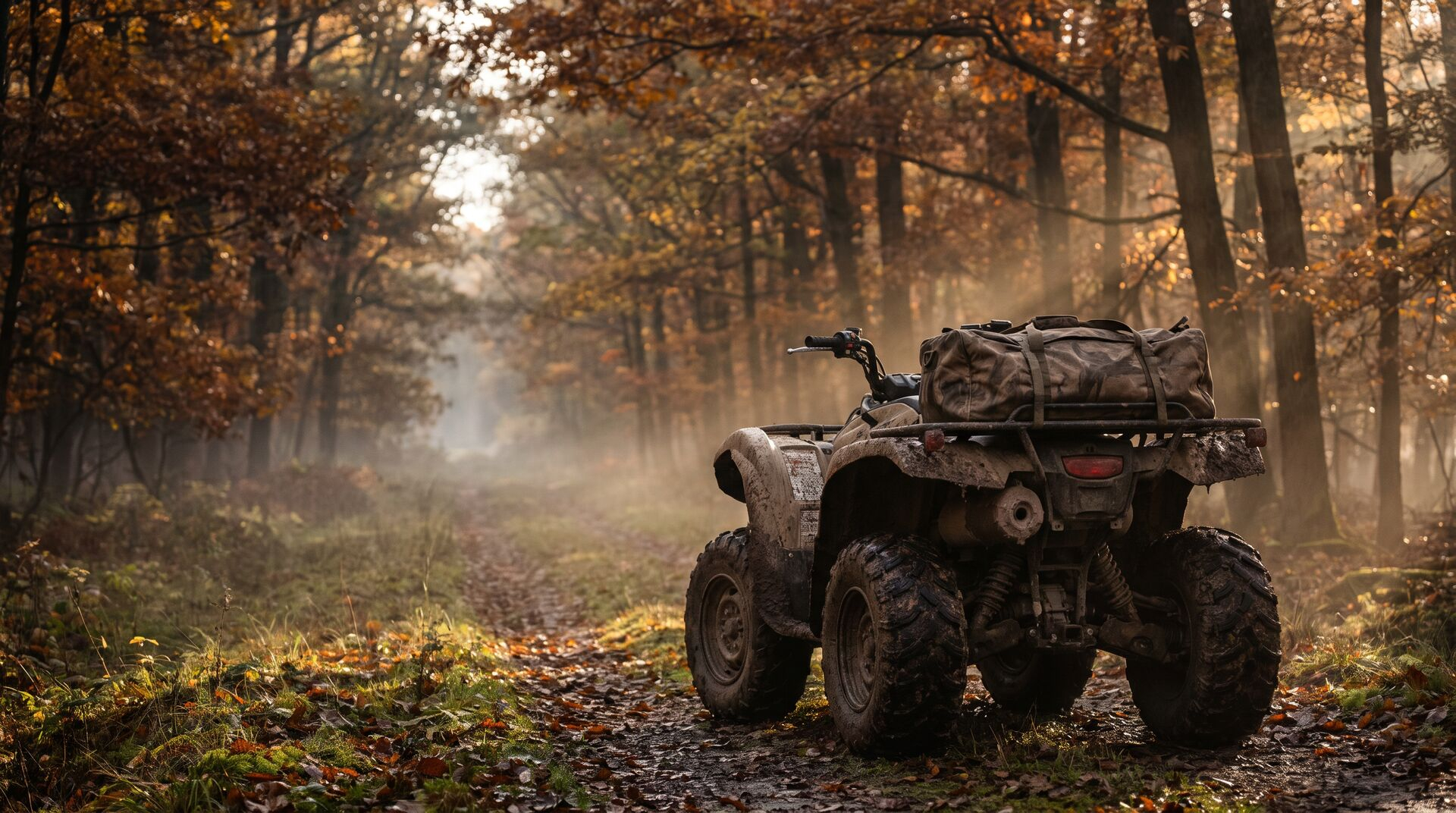
Nobody plans to spend opening morning staring at a dead battery or a flat rear tire. Yet that is exactly how a lot of hunts start, because the ATV sat since last season and nobody looked it over before the alarm went off at 4:30. Your machine is the quiet workhorse of the season, and the best time to find its problems is a few weeks out, when you can still order parts and fix things at an easy pace.
Since 1970, Carolina Cycle has supplied genuine OEM parts to riders and hunters across the mountains of western North Carolina and beyond. This guide skips the accessory wish list and focuses on readiness: what to inspect, which wear items to replace before opening day, how to run quietly in cold weather, what to carry for trail repairs, and when genuine parts earn their place. If you want a hunting ATV that starts, stops, and gets you home, this is the checklist behind it.
Quick Summary
- Inspect the machine a few weeks before the season, not the night before, so you have time to order parts.
- Replace the wear items that fail in the field: tires, brake pads and fluid, air filter, belt or chain, and a weak battery.
- Cold mornings expose weak batteries, old fluids, and stiff cables first, so test a cold start before you rely on one.
- Carry a small repair kit and spares sized to your trail, since help is often a long walk away.
- Genuine OEM parts fit and perform to the maker's specifications, which matters most when you are far from the truck.
Why Readiness Comes Before Accessories
Racks, lights, and gun mounts are helpful, but none of them matter if the machine will not start or will not stop. A hunting ATV works harder than most trail machines. It idles, creeps, and stops and starts often, it sits cold in the dark, and it spends long hours in mud, brush, and wet leaves. That mix is hard on batteries, brakes, filters, and drive components alike.
Reliability also protects the hunt itself. A breakdown in the back country costs you the morning, and a machine that runs rough or loud costs you the stand. Spending an afternoon on readiness is cheaper in time and frustration than any single fix you would make on the trail, and it keeps the focus where it belongs.
How to Do a Pre-Season Inspection
A good inspection takes about an hour and does not need special tools. Work from the outside in, write down what you find, and order parts for anything marginal. Your owner's manual lists the service points and intervals for your exact model, so keep it close and treat it as the final word.
Start with a Walk-Around
Park the machine on level ground and look it over cold. Check the tires for cracks, plugs, and uneven wear, and look at the suspension and steering for bent, loose, or torn parts. Watch for torn boots on the axles, which let dirt in and grease out. Look underneath for fresh fluid, and check that cables and levers move smoothly instead of sticking.
Check Fluids and Filters
Look at engine oil, coolant, and brake fluid, and check any other fluids your manual calls for. Dark, gritty, or low fluid is a sign it is time to service, not to top off and hope. Pull the air filter and hold it to the light, because a hunting machine that sat in a shed collects dust and sometimes nests. If the filter is dirty, oily, or damaged, replace it.
Finish with a Start-and-Run Test
Start the machine cold, ideally in the cool of the morning, and let it settle. Listen for unusual noises, watch for smoke, and test the brakes, throttle, and steering on a short loop. Then shut it off and let it cool, and start it again. A machine that starts fine once but struggles on the second try is telling you something about its battery or fuel system.
Wear Items to Replace Before Opening Day
These parts wear gradually, so the change is easy to miss until a failure makes it obvious. Compare each one to the limits and intervals in your owner's manual, and replace it when it is near the limit rather than past it. You can find genuine components for your machine in our Kawasaki ATV parts catalog, Yamaha ATV parts catalog, and Suzuki ATV parts catalog.
Tires and Wheels
Tires carry the whole machine through mud, rock, and wet leaves, so tread depth and condition matter. Look for sidewall cracking, dry rot on older tires, and slow leaks. Set pressure to the figure in your manual, and check it cold, since cool fall air will lower it. Check wheel nuts and wheel bearings too, because a wobble you ignore at home gets worse with a heavy load.
Brake Pads and Brake Fluid
Brakes on a hunting machine see a lot of slow, steep work with a load on the back. Check pad thickness, look at rotors for scoring or heat marks, and check the lever feel. A spongy lever or dark fluid points to a bleed or a fluid change, which is work worth leaving to a qualified technician at your dealer if you are not comfortable doing it yourself. Brakes are not the place to guess.
Air Filter and Intake
Dust, pollen, and brush all end up in the air filter, and a clogged one makes the engine run rich, lose power, and burn extra fuel. Replace a tired filter and check the airbox for debris and cracks, since a gap lets unfiltered air straight into the engine. If you ride in wet conditions, make sure the intake and any drain points are clear.
Battery for Cold Starts
Batteries lose strength in the cold, and a battery that barely made it through summer can quit on the first frosty morning. Check the terminals for corrosion, clean them if needed, and have the battery load-tested at a shop or by a dealer. If it is weak, replace it now, and keep it on a maintenance charger between rides so it is full when you need it.
Drive Belt, Chain, or Shaft
Depending on your model, power reaches the wheels through a belt, a chain, or a shaft. Belts and chains wear and stretch with use, and both give clues before they fail: cracking, glazing, rough spots, tight or loose slack, or dry, rusty links. Inspect whatever your machine uses against the manual, and replace worn parts as a matched set where the manual says to. Genuine drivetrain parts are made to the same tolerances as the originals, which is why fit is rarely a question.
Cooling System
A hunting machine moves slowly and sits idling in cool air, but it can still overheat if the radiator is clogged with mud and chaff. Clean the fins gently, check hoses for soft spots or cracks, and check the coolant level and condition. Fix a small leak now, because it grows with every ride.
Fasteners and Hardware
Vibration loosens bolts over time. Walk the machine and check wheel nuts, suspension and steering fasteners, skid plate bolts, and anything that carries weight. Check them against the specifications in your manual, and replace any damaged or rounded hardware with genuine parts instead of whatever is in the coffee can.
Quiet and Cold-Weather Operation
Part of readiness is arriving without announcing yourself. A well-tuned engine runs smoother and quieter, so a clean air filter, fresh fluids, and a healthy exhaust system all help. Listen for rattles as well. Loose fasteners, worn bushings, and tired racks make noise that carries a long way in cold, still air, and tightening or replacing them costs little.
Cold changes how the machine behaves, too. Let the engine warm up gently before you load it, because cold oil is thick and cold tires are stiff. Keep your pace slow over frosty ground and wet leaves, and expect longer stopping distances. If your machine has a choke or cold-start procedure, learn it at home, in daylight, so it is routine at 5:00 in the dark.
What to Carry for Trail Repairs
Your kit does not need to fill a trunk, but it should cover the failures most likely to strand you. Size it to your distance from help. A field a few minutes from the truck needs less than a ridge an hour's ride away.
- A tire plug kit, a small pump or compressor, and a pressure gauge.
- A basic set of sockets, wrenches, and pliers that fit your machine's fasteners.
- A spare drive belt if your model uses one, or chain tools and a master link if yours uses a chain.
- Spare bulbs or fuses that match your machine, and a few zip ties and electrical tape.
- A tow strap, a headlamp, and a charged phone or other way to call for help.
Check the kit at the same time as the inspection, so you are not discovering a missing socket on the trail. Carrying a spare part you have never practiced fitting is only half useful, so know how your repair works before you need it.
When Genuine OEM Parts Matter
Some parts are low risk to swap with a close match, but many are not. Brake components, drive belts, chains, filters, and electrical parts all depend on exact fit and tolerance, and a failure in any of them far from the truck is expensive in more than money. Genuine parts are built to the maker's specifications for your exact model, so you are not guessing at fit or quality. Our guide to choosing between OEM and aftermarket parts walks through the trade-offs in more detail.
On the do-it-yourself question, many items are reasonable for a careful owner with the manual in hand: filters, fluids you are comfortable handling, tire repairs, and basic hardware checks. Brake hydraulics, drivetrain work, and anything you are unsure about belong with your dealer's service department. Carolina Cycle supplies genuine parts online, and your dealer or a qualified technician handles the installation and service work.
A Quick Word on Accessories
Once the machine is sound, accessories are the finishing touch. Secure gear carriers, cargo racks, and lighting make the hunt easier, and good lighting is especially useful in the dark hours at each end of the day. Our guide to UTV headlights covers lighting considerations that apply across machines. Just remember that an accessory is only useful when it is mounted to a machine that is running well.
Frequently Asked Questions
When should I start preparing my ATV for hunting season?
Start three to four weeks before opening day. That gives you time to inspect the machine, order genuine parts, and have any dealer service done without rushing.
How do I know if my battery will handle a cold morning?
Have it load-tested, since a battery can look fine and still fail under cold load. If it is weak, replace it, and keep it on a maintenance charger between outings.
Which parts fail most often on a hunting ATV?
Batteries, tires, brake pads, air filters, and drive belts or chains are common culprits. Cooling and fastener issues come next, especially after mud or rough trails.
How can I keep my ATV quieter in the woods?
Keep the machine well tuned, tighten loose hardware, and ride slowly with smooth inputs. A clean filter, fresh fluids, and a sound exhaust system all help.
How do I find the right OEM parts for my ATV?
Start with your exact make, model, and year, then check the owner's manual for the part and interval. Tell us what you ride and we will help you confirm the right genuine component.
Be Ready Before the Season Starts
An hour in the garage now saves a long, cold walk later. Inspect the machine, replace what is worn, learn how it behaves in the cold, and pack a kit that matches your terrain. Then you can spend the season on the hunt instead of the repair.
When you are ready to line up parts for hunting season, contact our team through our OEM parts support page. We have supplied genuine parts to riders and hunters since 1970, and we will help you match the right components to your machine.
