


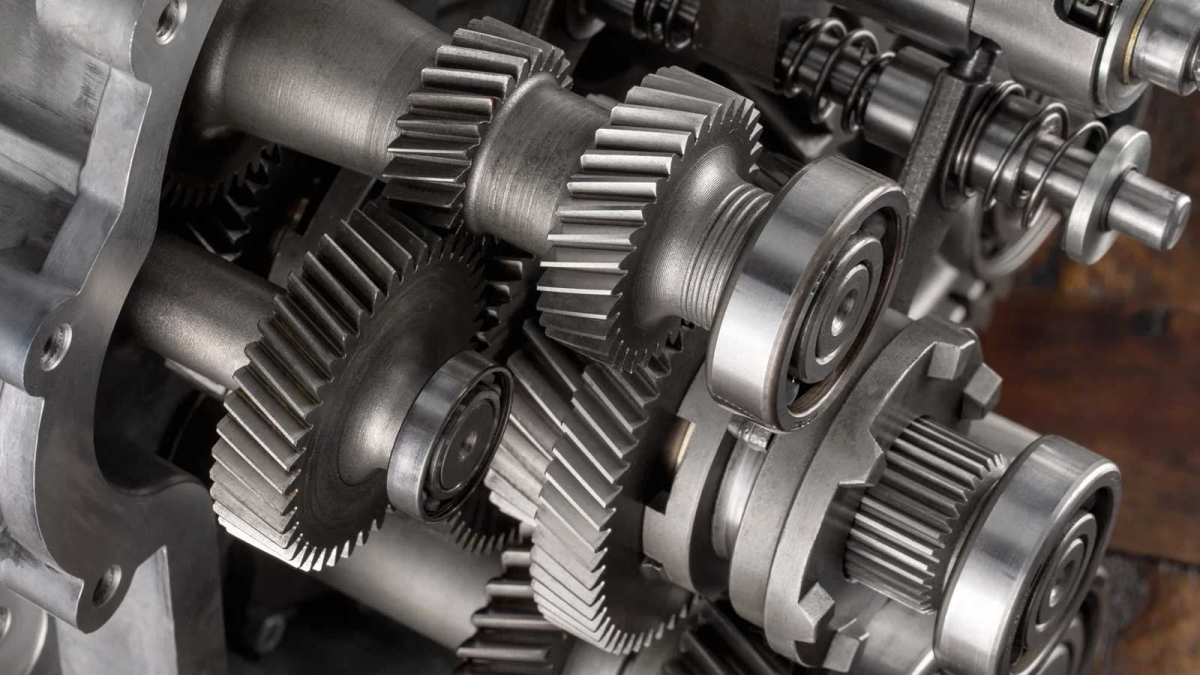
The transmission is the part of your ATV that almost nobody thinks about until something goes wrong. It translates engine power into wheel speed across an enormous range of conditions: crawling up a steep rocky climb, accelerating hard out of a mud hole, cruising a flat trail at sustained speed. The system doing all of that work varies significantly depending on your machine, and the type of transmission your ATV uses determines not just how it rides but what it needs from you to stay in good condition.
Understanding how your ATV's transmission works makes you a more capable rider and a more informed owner. It puts context behind service intervals that might otherwise feel arbitrary, helps you recognize the early signs of problems before they develop into failures, and guides you toward the correct OEM maintenance components for your specific machine. This guide covers the three main ATV transmission types found across Honda, Kawasaki, Suzuki, and Yamaha models, how each one affects the riding experience, and what each design requires to stay reliable.
Quick Summary
- ATV transmissions fall into three main categories: CVT (continuously variable transmission), automatic with centrifugal clutch, and manual
- Each design translates engine power to wheel speed differently and creates different wear patterns and maintenance requirements
- CVT systems require belt inspection and periodic clutch service; manual transmissions require clutch adjustment and fluid service; automatic designs require fluid changes and centrifugal clutch inspection
- Using OEM-spec fluids and replacement components is especially important in transmission systems, where incorrect specifications have direct consequences for gear and bearing protection
- Understanding your transmission type helps you recognize early warning signs and make informed service decisions
Why ATV Transmission Type Matters for Maintenance
A transmission does more than change ratios. It absorbs shock loads from aggressive acceleration and terrain impacts, manages heat generated by friction between moving components, and operates in an environment of varying temperature, load, and contamination exposure. The specific way it does all of those things differs fundamentally between a CVT, an automatic, and a manual, and those differences translate directly into different service needs.
A CVT belt that has glazed from heat operates across its entire ratio range with reduced efficiency, affecting performance in every situation from low-speed crawling to full acceleration. A manual transmission running degraded fluid loses lubrication protection on every gear change. A centrifugal clutch with worn friction material slips under load in ways that can be subtle at first and progressive over time. None of these are dramatic failures that announce themselves clearly. They are gradual degradations that a rider familiar with their transmission's normal behavior can detect early, and an unfamiliar rider might attribute to the terrain.
The Three Main ATV Transmission Types
CVT: Continuously Variable Transmission
The CVT is the most widely used transmission design in modern utility ATVs and side-by-sides across all four major brands. Understanding how it works explains both its appeal and its specific service requirements.
A CVT uses two variable-diameter pulleys, called the drive clutch (on the engine side) and the driven clutch (on the transmission side), connected by a belt. Each pulley consists of two conical faces that can move closer together or farther apart. When the faces move closer together, the belt rides higher on the pulley, effectively increasing the pulley's diameter. When they move apart, the belt rides lower, decreasing the effective diameter.
The drive clutch is centrifugally actuated: as engine RPM increases, weighted flyweights move outward, pushing the pulley faces together and driving the belt higher. Simultaneously, the driven clutch responds to load and belt tension, adjusting its effective diameter in the opposite direction. The result is a continuously changing ratio across a smooth, infinite range rather than discrete gear steps.
In practice, the three states look like this:
- Low RPM / high load: Belt rides low on the drive clutch and high on the driven clutch, producing maximum torque multiplication for climbing, hauling, or pulling out of a hole
- Rising RPM: Both clutch faces adjust continuously, shifting ratio smoothly as speed increases without any discrete gear change
- High RPM / cruising speed: Belt rides high on the drive clutch and low on the driven clutch, producing an efficient overdrive-style ratio for sustained trail or road speed
The practical riding experience of a CVT is seamless acceleration without any gear changes. The engine stays in its power band across a wide range of vehicle speeds, which is particularly valuable in utility applications where load varies dramatically. The trade-off is that CVTs generate heat during high-load, low-speed operation, which is the most demanding condition for the belt and clutch components.
Automatic Transmission with Centrifugal Clutch
A centrifugal clutch automatic is mechanically simpler than a CVT and is commonly found on entry-level, youth, and some utility ATV models across Honda, Kawasaki, Suzuki, and Yamaha lineups. It provides automatic clutch engagement without the variable-ratio capability of a CVT.
The centrifugal clutch works on a straightforward principle: weighted clutch shoes are mounted on a central hub driven by the engine. At idle speed, spring tension holds the shoes away from the outer clutch drum. As engine RPM rises, centrifugal force overcomes the spring tension and the shoes expand outward, contacting the drum and transmitting drive. The engagement RPM is determined by the weight and spring specification of the clutch components.
Many of these designs pair the centrifugal clutch with a simple planetary gearset or conventional gear transmission, providing a small number of selectable ranges such as low, high, and reverse, with the centrifugal clutch handling automatic engagement and disengagement within those ranges.
The riding experience is straightforward: the rider selects the appropriate range and the clutch engages automatically with throttle input. There is no clutch lever to operate. Engine braking is present but typically less pronounced than on a manual transmission.
Manual Transmission
Manual transmissions are found on sport ATVs and some utility models across all four brands, including several current Yamaha and Kawasaki sport ATV models. They offer the most direct connection between rider input and drivetrain response, and they are the design most familiar to riders coming from dirt bike backgrounds.
A manual ATV transmission uses a conventional multi-plate wet clutch: a stack of alternating friction plates and steel plates bathed in transmission oil, clamped together by spring pressure when the clutch lever is released and separated by hydraulic or cable pressure when the lever is pulled. Gear selection is made via a foot shifter, with a neutral position typically between first and second gear.
The riding experience of a manual transmission provides precise control over ratio selection and engine braking, which many experienced riders prefer for technical terrain. It also requires more active rider input, particularly in technical low-speed trail riding where clutch control and gear selection are constant decisions.
How Each Transmission Type Affects Your Riding
The transmission type shapes the character of an ATV in ways that go beyond simple preference. Here is how each design plays out on the trail:
CVT
- Feels tractable and forgiving, particularly in technical terrain where load varies constantly
- Engine stays in its effective power range automatically, reducing rider workload
- Less direct engine braking than a manual on steep descents; many riders supplement with light brake application
- Well-suited to utility work and less experienced riders
Centrifugal Clutch Automatic
- Simple and intuitive: select a range, apply throttle, and the clutch engages automatically
- No clutch lever to manage
- Engine braking is present but typically less pronounced than a manual
- Best suited to entry-level, youth, and straightforward utility applications
Manual
- Rewards rider skill with precise control over ratio selection and engine braking
- Ability to hold a specific gear through a technical section gives experienced riders a clear handling advantage
- Direct mechanical engagement provides clearer drivetrain feedback about traction
- Requires more active input, particularly at low speeds on technical terrain
OEM Maintenance Requirements by Transmission Type
CVT Belt Inspection and Replacement
The CVT belt is the most frequently serviced component in a CVT system and the one where OEM specification matters most. Belt width, length, angle of the side faces, and material composition are all engineered to the specific clutch dimensions and operating parameters of your ATV model. An OEM belt engages the clutch faces at the correct geometry across the full ratio range. A belt that is slightly narrower or wider, or made from a compound with different flex characteristics, produces a subtly incorrect engagement angle that accelerates wear on both the belt and the clutch sheave faces.
Inspect the belt by removing the CVT cover and examining both faces for cracking, fraying at the edges, glazing on the contact faces, and any missing material. Measure belt width against the service limit in your owner's manual; a belt worn below its minimum width should be replaced before riding. For genuine CVT belts matched to your Yamaha, Honda, Kawasaki, or Suzuki ATV, browse the relevant catalog: Honda ATV OEM parts, Kawasaki ATV OEM parts, Suzuki ATV OEM parts, and Yamaha ATV OEM parts.
CVT Clutch Service
The drive and driven clutch assemblies require periodic inspection beyond the belt. Drive clutch flyweights wear at their contact points and can develop uneven wear that changes the engagement RPM. Driven clutch springs fatigue over time, affecting the back-torque behavior under deceleration. Clutch sheave faces can develop glazing from belt heat that reduces belt grip and efficiency. Service involves disassembly, inspection of wear items against service manual specifications, cleaning, and replacement of any components that fall outside tolerances with OEM parts.
Gearbox and Transmission Fluid
Both manual transmissions and the gearbox sections of automatic and CVT designs require fluid service at intervals specified in the owner's manual. Transmission fluid lubricates gears and bearings, carries heat away from friction surfaces, and suspends wear particles until a drain interval removes them from the system.
OEM-spec transmission fluid is formulated for the specific friction characteristics required by the clutch plates in manual designs. Using an automotive gear oil or a fluid with different friction modifiers can alter wet clutch engagement feel and cause clutch slip under load. Fluid contaminated by water entry through a breather vent or seal failure appears milky or cloudy; contaminated fluid should be replaced immediately rather than at the next scheduled interval, as water in transmission fluid dramatically accelerates bearing and gear wear.
Clutch Components on Manual Models
The friction plates in a manual ATV clutch have a finite service life measured in engagement cycles and heat exposure. Worn friction plates produce clutch slip under hard acceleration: the engine revs increase without a corresponding increase in vehicle speed. OEM friction plate replacement restores the designed clamping force and engagement feel. The steel plates are inspected for warping at the same service interval. Cable-operated clutches require periodic free-play adjustment to maintain correct engagement and disengagement; hydraulic clutch systems require periodic fluid inspection.
Common Transmission Problems and What They Mean
Recognizing transmission symptoms early reduces the likelihood of a minor service need becoming a major repair.
Belt slip on a CVT: Engine RPM rises without a corresponding increase in vehicle speed under load. Indicates belt wear, glazing, stretch beyond service dimension, or clutch face glazing. Inspect belt and clutch sheave faces.
Difficulty finding neutral on a manual: Usually a cable adjustment issue or clutch plates dragging slightly when the lever is released. If neutral is easy to find with the engine off but hard with it running, clutch drag is the likely cause.
Transmission noise: Whining or grinding under load points to bearing or gear wear. Requires professional diagnosis to accurately locate the source.
Fluid leaks at seals: Seepage around the output shaft or shift shaft indicates seal wear. Address promptly to prevent the fluid loss that accelerates internal wear.
For a broader look at ATV drivetrain service, the Carolina Cycle ATV restoration guide covers related topics in useful detail.
Frequently Asked Questions
How long does an ATV CVT belt last?
Service life varies considerably by model, riding conditions, and load. Utility ATVs used for heavy hauling or towing place significantly more heat stress on the belt than trail-only machines. Most manufacturers recommend inspection at every 100 hours of operation and replacement based on condition rather than a fixed interval. Regular inspection is more reliable than a mileage-based schedule for CVT belts.
Can I service my ATV transmission myself?
CVT belt inspection and replacement is a straightforward DIY service for most models, requiring removal of the CVT cover and basic hand tools. CVT clutch service involves more disassembly and some specialized holding tools but is manageable with a service manual. Manual transmission fluid changes and clutch adjustment are accessible DIY tasks. Internal transmission repair, including bearing or gear service, is best handled professionally.
What happens if I use the wrong transmission fluid?
On manual ATVs with wet clutches, the wrong friction modifier specification can cause clutch slip or harsh engagement and accelerate plate wear. Inadequate viscosity reduces the film thickness between gear and bearing surfaces. Always verify the fluid type and specification in your owner's manual before servicing.
How do I know if my CVT clutch needs service?
Changes in engagement behavior are the clearest indicator: a CVT that previously engaged smoothly but now engages abruptly, slips under load, or produces a burning smell under high-load operation has components worth inspecting. Removing and examining the drive clutch for flyweight wear, spring fatigue, and sheave face condition answers most diagnostic questions without specialized equipment beyond the service manual.
Is a manual ATV transmission harder to ride than a CVT?
The skill requirement is genuinely higher in technical trail riding, where clutch control and gear selection become constant decisions. For riders with dirt bike or motorcycle experience, the transition is natural. Many experienced riders find the control advantage of a manual on technical terrain worth the additional input once the skill is developed.
Do all four brands offer each transmission type?
CVT transmissions are standard on utility and utility-sport models from all four brands. Manual transmissions appear primarily in sport ATV models, with Yamaha's Raptor lineup and Kawasaki's KFX series as notable examples. Centrifugal clutch automatics appear mainly in entry-level and youth models. Your owner's manual confirms the specific transmission in your model and year. If you need help identifying service components for your machine, our OEM parts support team can assist.
Know Your Transmission, Keep It Running
Understanding how your ATV's transmission works is the foundation for maintaining it correctly. Whether your machine uses a CVT belt system, a centrifugal automatic, or a manual with a wet clutch, the OEM components and fluids specified for your model are engineered to keep that system working precisely as intended across thousands of miles of riding.
Carolina Cycle carries genuine OEM parts for Honda, Kawasaki, Suzuki, and Yamaha ATVs. Browse your brand's catalog or contact our support team with questions about transmission service for your specific model.
