


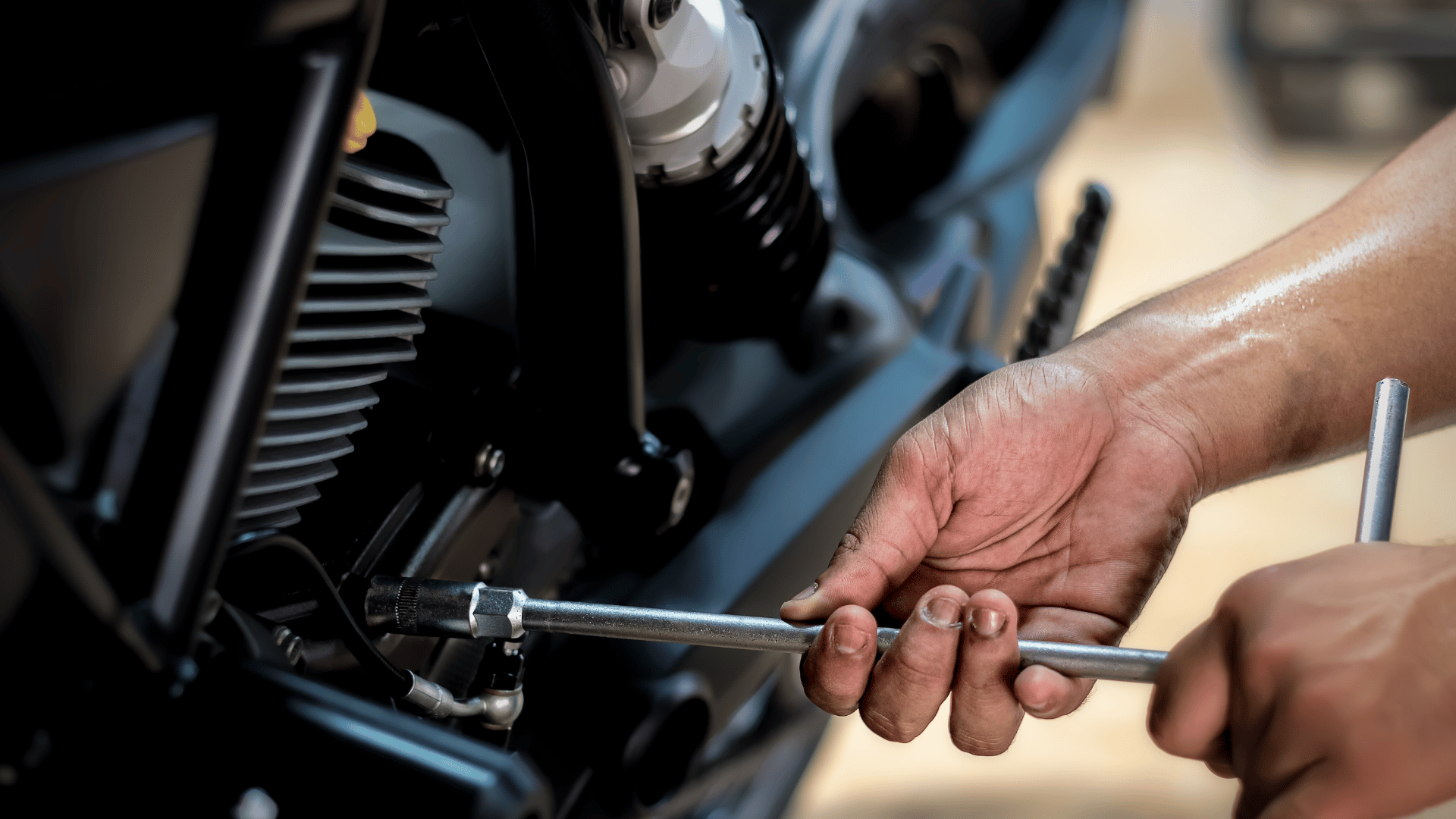
After months of winter storage, the temptation to throw a leg over your bike and head out on the first warm day is real. But that first ride of the season deserves a little patience. Motorcycles left in storage through the cold months experience a predictable set of changes — fluids degrade, seals dry out, batteries drain, and fuel systems attract moisture. Taking the time to work through a thorough pre-season inspection isn't just about peace of mind. It's the single most effective way to protect your investment and make sure your machine is genuinely ready for everything the riding season has to offer.
This guide walks through every major system on your motorcycle, what to look for, and where genuine OEM parts from Honda, Kawasaki, Suzuki, and Yamaha make the most meaningful difference in getting your bike back to factory-fresh performance.
Quick Summary
- Pre-season inspection covers eight key systems: fluids, battery/electrical, fuel, tires, brakes, drivetrain, controls, and lighting
- Winter storage causes predictable wear and degradation that can affect safety and performance
- OEM replacement parts ensure correct fitment, factory specifications, and warranty compliance
- Some checks are straightforward DIY tasks; others benefit from professional attention
- Sourcing OEM parts early in the season prevents delays when demand peaks in spring
Why Pre-Season Inspection Matters
Winter storage does more to a motorcycle than simply leaving it idle. Over a period of three to five months, several chemical and mechanical processes work quietly against your bike's readiness.
Gasoline begins to degrade in as little as 30 days in an unsealed system, with ethanol-blended fuels attracting moisture and leaving gummy deposits in carburetors and fuel injectors (U.S. Department of Energy, Alternative Fuels Data Center). Rubber seals and gaskets lose elasticity in cold, dry conditions, which can lead to minor leaks that become serious problems under riding loads. Brake fluid is hygroscopic, meaning it absorbs moisture from the air over time, which lowers its boiling point and compromises braking performance (Motorcycle Safety Foundation).
Genuine OEM parts restore your motorcycle to the exact tolerances and material specifications it left the factory with. An OEM fork seal engineered for your specific model fits without modification, holds up under the designed load, and won't compromise the suspension geometry that affects handling. Aftermarket alternatives may fit loosely or use different compounds that wear faster under real-world conditions. When you're bringing a motorcycle back to life after storage, starting with OEM components is the most reliable path back to full performance.
The Pre-Season OEM Inspection Checklist
Work through each system methodically. A clean workspace, good lighting, and the service manual for your specific model will make every step faster and more accurate.
Fluid Systems
Engine oil is your first check. If you changed the oil before storage (a best practice), inspect the current oil on the dipstick for color and consistency. Fresh oil is amber; oil that looks dark or gritty has broken down and should be replaced with the manufacturer-specified viscosity grade listed in your owner's manual. OEM oil filters are designed to the exact flow rate and filtration spec for your engine and should be replaced at every oil change.
Coolant should be inspected for color and concentration on liquid-cooled models. Coolant that has gone brown or rust-colored indicates contamination and needs to be flushed. Fork oil is easy to overlook, but degraded fork oil directly affects suspension performance, creating a vague, unpredictable feel in corners. Check your service manual for the recommended fork oil grade and replacement interval.
Brake fluid deserves particular attention. Most manufacturers specify DOT 4 fluid, which should be replaced every one to two years regardless of mileage due to moisture absorption (Kawasaki Service Manual Guidelines). Fluid that has gone dark amber or brown is overdue for a change.
Battery and Electrical
A battery that held a trickle charge through winter may still test low on cold-cranking amps. Use a quality battery tester rather than relying on whether the bike starts. An OEM-spec battery provides the correct cold-cranking amps, terminal configuration, and case dimensions for your model's battery tray.
While inspecting the battery, check all visible wiring harnesses for cracking, rodent damage, or corrosion at connectors. A small amount of dielectric grease on connectors before reassembly prevents future corrosion.
Fuel System
Drain or treat any fuel that sat untreated through winter. For carbureted models, remove and inspect the float bowl for varnish deposits; a gunked-up carb will cause rough running or no-start conditions. For fuel-injected models, an OEM fuel filter replacement is inexpensive insurance against injector contamination.
Inspect OEM fuel lines for cracking, hardening, or softness along their length. Rubber fuel lines have a service life; if yours show any signs of deterioration, replacement with OEM-spec lines prevents fuel leaks under the heat and pressure of riding conditions.
Tires and Wheels
Tires sitting under load for months can develop a flat spot at the contact patch. Minor flat spotting usually corrects itself after a few miles of riding, but inspect both tires carefully for sidewall cracking, tread depth, and any embedded objects. The minimum legal tread depth in most U.S. states is 1/32 inch, but most manufacturers and the Motorcycle Safety Foundation recommend replacing tires before they reach this point (MSF Rider Safety Resources).
Check cold tire pressure against the specification in your owner's manual, not the maximum pressure molded into the sidewall. Inspect wheel bearings by lifting each wheel and checking for play or roughness. Worn OEM wheel bearings compromise both handling and safety.
Brakes
Inspect brake pad thickness visually through the caliper window. Most OEM pads have a wear indicator groove; if the groove is gone, replacement is overdue. Check brake rotors for scoring, warping, or minimum thickness markings stamped into the rotor itself.
Squeeze each brake lever and pedal slowly and hold. A lever that sponges or slowly travels to the bar indicates air in the line or fluid that needs replacement. Bleeding brakes with fresh OEM-spec fluid restores firm, progressive feel.
Chain and Drive System
On chain-drive motorcycles, check chain slack against the specification in your owner's manual and inspect for tight links, rust, or O-ring damage. A worn chain accelerates sprocket wear and can fail dramatically at speed. Inspect the front and rear sprockets for hooked or shark-finned teeth, which indicate replacement is needed.
Clean and lubricate the chain with a quality chain lubricant after inspection. If the chain is near or past its service limit, OEM-spec replacement chains are sized and rated specifically for your model's power output.
Controls and Cables
Throttle should snap back instantly with no hesitation or sticking when operated through the full steering lock range. Clutch lever should feel smooth through its travel with no gritty or binding sensation. Inspect cable ends and housings for fraying, kinking, or cracking.
Cable lubrication is a quick DIY task using a cable luber tool and appropriate lubricant. If cables show visible damage or the action feels compromised, OEM replacement cables are the safest choice because they're cut to the exact length and routed for your model's frame geometry.
Lights and Signals
Confirm that headlight (high and low beam), tail light, brake light, turn signals, and instrument lighting all function. OEM replacement bulbs match the original wattage and beam pattern designed for your model's reflector housing. On models equipped with LED lighting, OEM assemblies prevent compatibility issues that can arise with non-spec replacements.
Check the horn. It's easy to skip, but it's a legal requirement and a genuine safety tool in traffic.
DIY vs. Professional Pre-Season Service
Most of the checks above are within the reach of a mechanically inclined rider with basic tools and a service manual. Fluid checks, battery testing, tire inspection, chain lubrication, and bulb replacement are all straightforward tasks that save time and money when done at home.
Some items are better handled professionally:
- Fork seal replacement requires disassembly of the front suspension and the ability to measure and set fork oil level precisely. Incorrect fork oil level affects handling in ways that can be difficult to diagnose.
- Brake system bleeding and caliper rebuilds on bikes with signs of caliper sticking or uneven pad wear benefit from professional attention, particularly on ABS-equipped models.
- Carb synchronization on multi-cylinder bikes is a task that requires specialized vacuum gauges and experience to perform correctly.
- Electrical diagnostics on fuel-injected models with fault codes stored in the ECU require a scan tool and knowledge of manufacturer-specific diagnostic procedures.
The goal isn't to avoid working on your own bike. It's to be honest about where a professional's tools and experience pay off in safety and time saved.
Stocking Up on OEM Parts Before Riding Season
Spring is the busiest season for powersports parts. Ordering OEM components for your planned service ahead of demand peaks in March and April means less waiting and a faster turnaround on getting your motorcycle road-ready.
Carolina Cycle carries genuine OEM parts for Honda, Kawasaki, Suzuki, and Yamaha motorcycles, with an online catalog that makes it straightforward to identify and order the exact parts for your year, make, and model. Browse Honda motorcycle OEM parts, Kawasaki motorcycle OEM parts, Suzuki motorcycle OEM parts, or Yamaha motorcycle OEM parts to get started.
Have questions about which parts are right for your specific model year or configuration? Reach out to our OEM parts support team for guidance.
Frequently Asked Questions
How long can gasoline sit in a motorcycle before it goes bad?
Untreated pump gasoline typically begins to degrade within 30 days and can cause significant varnish and deposit buildup within 60 to 90 days, particularly in ethanol-blended fuel (U.S. Department of Energy). Using a quality fuel stabilizer before storage extends fuel life significantly. If you're unsure whether stored fuel is still usable, the safest approach is to drain it and start with fresh fuel before the riding season.
What is the difference between OEM and aftermarket brake pads?
OEM brake pads are engineered to match the exact friction coefficient, wear rate, and thermal characteristics specified by the manufacturer for your model's brake system. Aftermarket pads may vary in compound, leading to different bite feel, increased rotor wear, or reduced performance at high temperatures. For street riding where consistent, predictable braking is essential, OEM pads are the dependable choice.
How do I know if my fork seals need replacing?
The clearest sign is oil visible on the fork tube below the seal, often appearing as a dark film or ring around the inner tube. You may also notice degraded suspension feel: excessive dive under braking, loss of damping, or a tendency to top out over bumps. Some minor weeping can be addressed with a fork seal cleaning tool, but actively leaking seals should be replaced promptly to prevent oil contamination of the front brake.
Is it safe to ride on tires that sat in storage all winter?
Tires that sat for a typical riding off-season (three to five months) in a garage environment are generally safe to use after a careful visual inspection for sidewall cracking, UV damage, and tread condition. Tires stored in temperature extremes or for longer periods may show surface cracking or hardening that compromises grip. When in doubt, have tires inspected by a professional before riding.
How often should motorcycle brake fluid be changed?
Most manufacturers recommend changing brake fluid every one to two years regardless of mileage, because brake fluid absorbs moisture over time even in a sealed system. Moisture contamination lowers the fluid's boiling point, which can lead to brake fade under hard use. Checking your owner's manual for the recommended interval and fluid specification is the most reliable guide.
Can I use any 12-volt battery in my motorcycle?
No. Batteries vary by cold-cranking amps (CCA), case dimensions, terminal position, and terminal type. Using a battery that doesn't match your model's specifications can prevent proper fitment, deliver insufficient starting power, or in some cases damage the charging system. OEM-spec batteries are matched to your motorcycle's electrical requirements and physical space constraints.
Conclusion
A thorough pre-season inspection takes a few hours and pays dividends across an entire riding season. Working through each system methodically, replacing worn components with genuine OEM parts, and addressing any issues before the first ride sets the foundation for reliable, enjoyable riding from the first warm day through the end of fall.
Carolina Cycle has been supporting powersports riders with genuine OEM parts for Honda, Kawasaki, Suzuki, and Yamaha since 1970. If you have questions about sourcing the right parts for your pre-season service, our parts support team is ready to help.
