


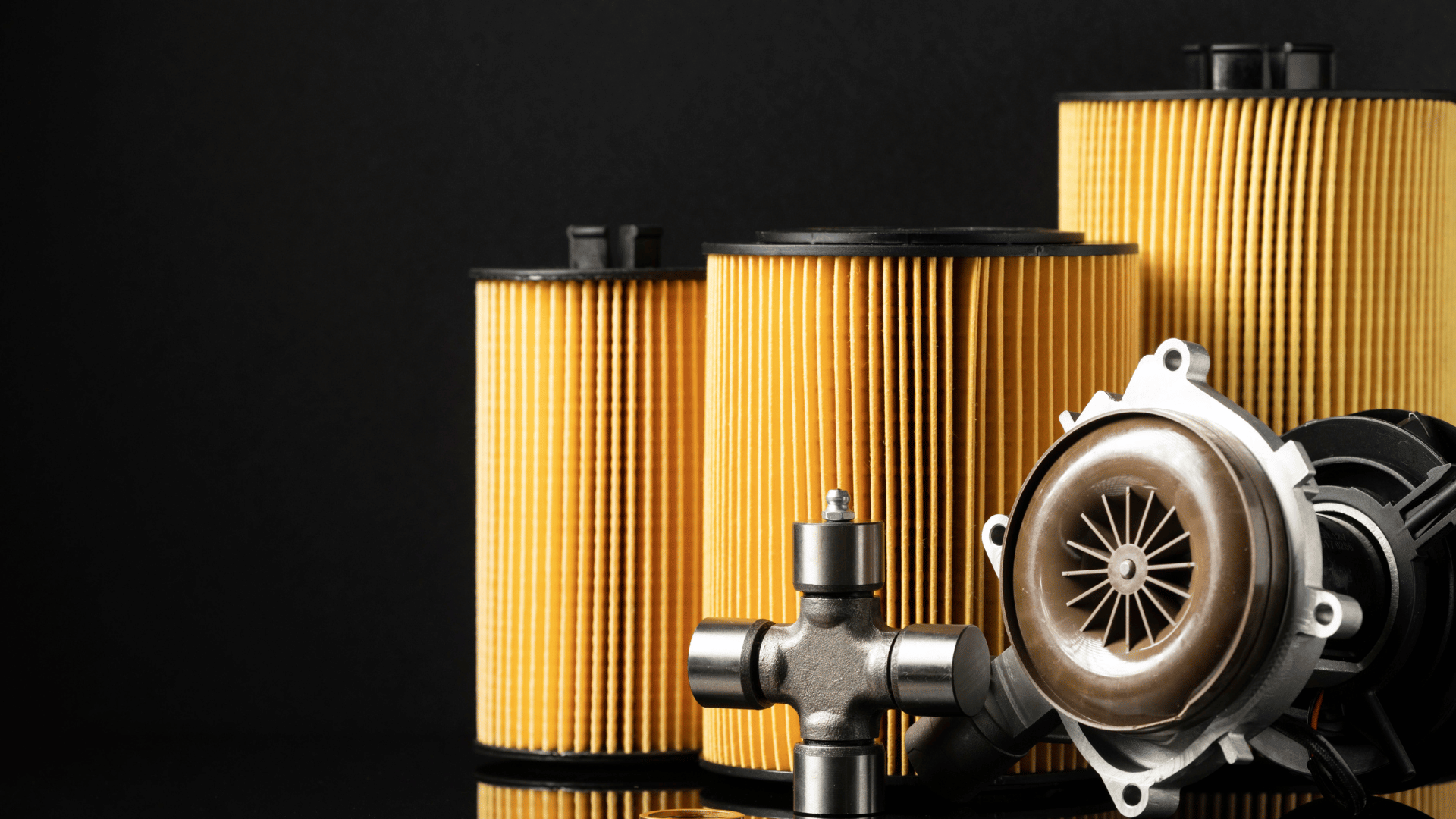
The oil filter is one of the least expensive components on a powersports machine and one of the most consequential. Every drop of oil that circulates through your engine passes through it. Its job is to trap contaminants before they reach bearing surfaces, oil passages, and moving parts, and to keep the lubrication system functioning correctly from cold start to operating temperature. It is, in short, the last line of defense between your engine and the particles that cause wear.
OEM vs. Aftermarket Oil Filters: A Complete Guide for Motorcycle and ATV Owners
Given that role, the decision between an OEM oil filter and an aftermarket alternative deserves more consideration than it usually gets at the service counter. This guide explains what an oil filter actually does, how OEM and aftermarket filters differ in the details that matter, and which situations make the OEM choice especially important.
What an Oil Filter Actually Does
An oil filter is not simply a canister of paper that catches debris. It is a precision assembly of several components, each with a specific function and specification.
The filtration media is the element that captures particles. Media is rated by micron size: the smaller the micron rating, the finer the particles captured. Higher-quality media also has greater capacity, meaning it holds more contaminants before bypass occurs.
The bypass valve opens when the filter is cold and oil viscosity is high, or when the filter media becomes saturated, to prevent oil starvation by allowing unfiltered oil to circulate rather than none at all. The opening pressure of this valve is a precise specification: too low and it bypasses before the media is actually saturated, routing unfiltered oil through the engine during normal operation; too high and it can starve the engine of oil at cold start.
The anti-drain-back valve prevents oil from draining out of the filter when the engine is off, ensuring that oil pressure builds quickly on startup rather than requiring the pump to refill an empty filter housing. On engines where the filter is mounted horizontally or at an angle facing downward, a failed or absent anti-drain-back valve produces a momentary period of dry running on every cold start.
The housing and gasket must withstand sustained oil pressure and temperature cycling across thousands of miles without cracking or leaking. Thread pitch and gasket diameter must match the filter mount on your specific engine precisely.
How OEM and Aftermarket Filters Differ
Filtration Media
OEM filters use media specified by the manufacturer for the particle size and flow rate characteristics of each engine's lubrication system. The micron rating is matched to the clearances of that engine's bearings and oil passages: fine enough to protect those clearances, coarse enough to maintain adequate flow under all operating conditions.
Aftermarket filter media varies significantly by manufacturer and price point. Some aftermarket filters use high-quality synthetic media that matches or improves on OEM performance. Budget alternatives frequently use less consistent media with higher micron ratings or lower contaminant capacity, providing less protection under extended use.
Bypass Valve Specification
The bypass valve opening pressure is an engine-specific specification. An OEM filter carries the exact pressure rating the manufacturer determined for that engine's lubrication system. An aftermarket filter may use a single bypass valve specification across multiple filter SKUs to reduce manufacturing complexity, meaning the actual opening pressure may not match your engine's design.
A bypass valve that opens too early routes unfiltered oil past the media during normal operation. In a high-mileage engine or one running in dusty or muddy conditions, this distinction matters significantly.
Anti-Drain-Back Valve
On engines where the filter position makes drain-back a concern, OEM filters include an anti-drain-back valve of the appropriate material and spring rate for that application. Nitrile valves perform adequately under moderate temperature conditions; high-performance engines running synthetic oil at elevated temperatures benefit from silicone anti-drain-back valves, which is what OEM filters specify for those applications. Budget aftermarket filters sometimes omit or downgrade this component.
Housing and Thread Quality
OEM filter housings are manufactured to the wall thickness and material specification required to handle the oil pressure of each engine safely. The thread pitch and gasket diameter are matched precisely to the filter mount. Aftermarket filters at the budget end of the market have occasionally been associated with housing failures or gasket leaks, outcomes that are avoidable and expensive relative to the cost of an OEM filter.
The Real Cost Comparison
An OEM oil filter costs more upfront than a budget aftermarket alternative. That difference needs to be weighed against what an oil filter is actually protecting.
An engine rebuild on a mid-size motorcycle or ATV runs well into the thousands of dollars. The oil filter is changed at every oil service interval, typically every one to two years of normal riding. The cumulative cost difference between OEM and budget aftermarket filters over several years of ownership is a relatively small number. Framed against the protection the OEM filter provides at the most critical point in the lubrication system, the cost argument for budget alternatives is difficult to sustain.
For pricing on OEM filters for your specific model, contact the Carolina Cycle support team directly.
OEM Oil Filter Guidance by Brand
Honda
Honda motorcycles and ATVs use a range of filter configurations across their model lineup. Browse Honda motorcycle OEM parts or Honda ATV OEM parts for your specific application.
Kawasaki
Browse Kawasaki motorcycle OEM parts or Kawasaki ATV OEM parts to identify the correct filter by displacement and model year.
Suzuki
Browse Suzuki motorcycle OEM parts or Suzuki ATV OEM parts for the correct filter for your model.
Yamaha
Browse Yamaha motorcycle OEM parts or Yamaha ATV OEM parts for motorcycles, ATVs, and side-by-sides.
When OEM Matters Most
The OEM filter choice is especially important in several situations:
- High-performance and sport models running tight bearing tolerances where incorrect bypass valve specification has the most consequence
- Engines in rebuild or break-in where maximum filtration protects new surfaces during the critical wear-in period
- ATVs ridden in dusty or muddy conditions where contaminant load on the filter is significantly higher than average
- Machines used at track days or sustained high-RPM operation where oil temperature and pressure are at the upper end of their operating range
- Older or high-mileage engines where oil already contains more particulates and consistent filtration is most important
Frequently Asked Questions
Are all powersports oil filters the same size?
No. Filter dimensions, thread pitch, gasket diameter, and internal specifications vary by engine. Using a filter from a different application, even one that threads on correctly, risks incorrect bypass valve pressure, gasket leak, or inadequate filtration for your engine's design. Always use the filter specified for your exact model year and engine variant.
Can a wrong bypass valve pressure damage my engine?
Yes. A bypass valve with too-low an opening pressure will route unfiltered oil through the engine during normal operation whenever oil viscosity is slightly elevated, including on cool days or in cold climates. Over time, the unfiltered particles circulated during these bypass events contribute to accelerated bearing wear. A bypass valve with too-high an opening pressure can delay bypass at cold start, potentially contributing to oil starvation in extreme cold conditions.
How often should I change my oil filter?
The owner's manual for your specific model is the authoritative guide. Most manufacturers recommend changing the filter at every oil change. Some specify every other oil change on models with high oil volume. Shortening the interval in dusty, muddy, or high-use conditions is always a reasonable precaution.
Do OEM filters work with synthetic motor oil?
Yes. OEM filters are compatible with the oil type recommended in your owner's manual, which for many modern powersports engines specifies a full or semi-synthetic formula. The anti-drain-back valve material in OEM filters for applications calling for synthetic oil is specified accordingly.
Is a more expensive aftermarket filter always better than an OEM filter?
Not necessarily. Some premium aftermarket brands produce filters with high-quality media and precise specifications that compare favorably to OEM performance. The risk is in the mid-to-low price tier, where manufacturing compromises are more likely to affect bypass valve accuracy, media quality, and housing integrity. When in doubt, the OEM filter is the known quantity.
Choose the Filter Your Engine Was Designed For
The oil filter your manufacturer specified for your engine is the one engineered to work with its lubrication system. Genuine OEM filters for Honda, Kawasaki, Suzuki, and Yamaha motorcycles and ATVs are available through Carolina Cycle's online catalog.
Browse your brand's parts catalog to find the correct filter for your model, or contact our OEM parts support team with any questions about filter selection or service intervals.
