


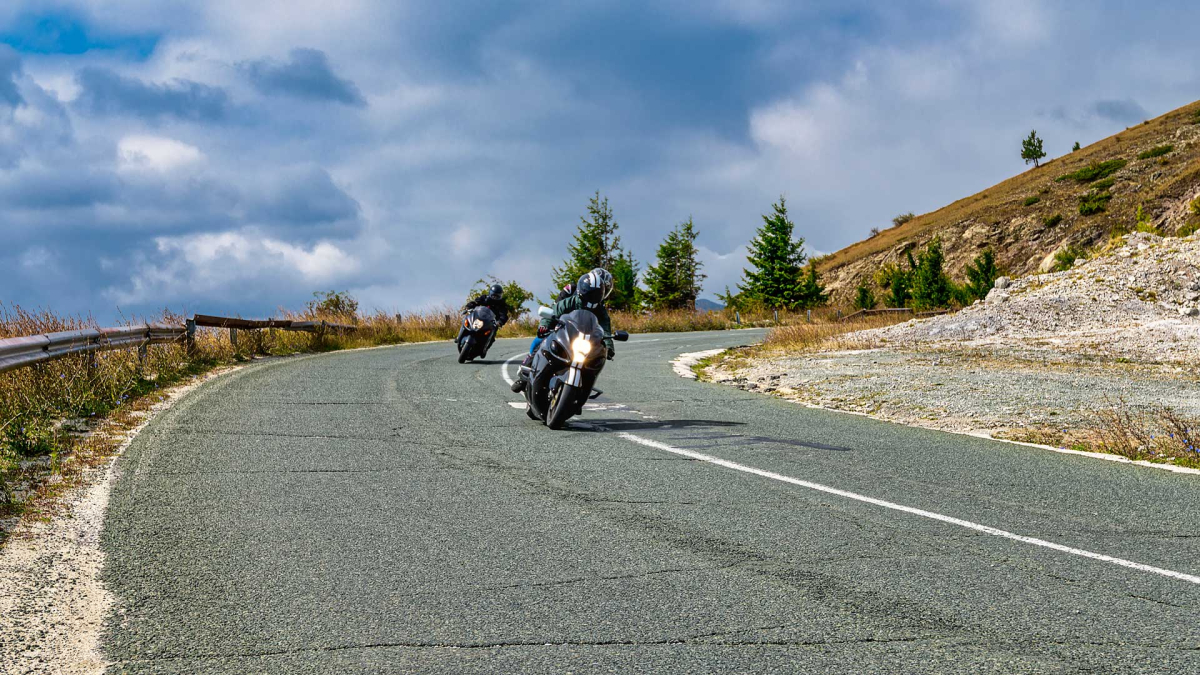
Southern California's canyon roads have a reputation that extends well beyond the region. Mulholland Highway, Angeles Crest, Ortega, Malibu Canyon — these roads draw riders from across the state and the country precisely because they offer a density of technical riding that is difficult to find anywhere else. Close-radius corners, elevation changes, varied surface conditions, and stretches of open road between demanding sections make Southern California canyon riding a distinct discipline.
The performance and safety demands of technical canyon riding are equally distinct. Repeated braking cycles, sustained cornering loads, cold tire conditions on shaded sections, and the stop-and-go character of popular canyon roads on weekend mornings all place specific stresses on your motorcycle's systems. Genuine OEM components maintained to factory specification are the foundation of a motorcycle that handles those demands predictably and safely.
What Canyon Riding Demands of Your Motorcycle
Technical canyon riding is harder on a motorcycle than an equivalent distance of highway riding in almost every measurable way.
Repeated hard braking
Repeated hard braking on canyon descents builds heat in the brake system at a rate that sustained highway riding never approaches. Brake fade — the loss of braking force caused by fluid boiling in the hydraulic line — is a real risk on long descents with frequent braking if the fluid is degraded or the pads are past their effective range. Fresh OEM brake fluid and pads within their service life are not optional equipment for serious canyon riding.
Sustained cornering loads
Sustained cornering loads stress tires and suspension components in ways that straight-line riding does not. A tire that wears primarily in its center from highway use develops a rounded contact patch profile that offers reduced grip at lean angles. Suspension components that are worn or leaking damping fluid produce inconsistent feedback through corners, which is precisely when consistent feedback matters most.
Temperature variation
Sudden temperature variation between shaded canyon sections and open sun-exposed stretches can keep tires below their optimal operating temperature through an entire early morning riding session. Cold tires offer meaningfully less grip than warmed-up tires, and canyon riders who push hard before their tires have reached operating temperature are working with less margin than they may realize.
Stop-and-go traffic
Traffic on popular canyon roads on weekend mornings keeps liquid-cooled bikes at low speed with minimal airflow through the radiator, shifting the cooling burden to the electric fan. A fan that is underperforming allows temperatures to climb steadily in traffic before a single technical section has been ridden.
Notable Southern California Canyon Roads
Mulholland Drive and Mulholland Highway
Mulholland Drive runs through the Hollywood Hills from Cahuenga Pass west to Coldwater Canyon. Mulholland Highway continues west through the Santa Monica Mountains to Pacific Coast Highway, with the technical sections near the Rock Store making it one of the most famous motorcycle roads in the country.
Angeles Crest Highway (SR-2)
Angeles Crest climbs from La Cañada Flintridge into the San Gabriel Mountains, reaching over 7,000 feet at its highest sections. The elevation change produces significant temperature variation, and the mix of open sweepers at altitude and tighter technical canyon sections rewards versatile setup. Check Caltrans status before riding, as the road is occasionally closed by weather or rockfall.
Malibu Canyon and Las Virgenes Road
Malibu Canyon Road connects Pacific Coast Highway to the Conejo Valley through a narrow canyon with variable surface conditions. Las Virgenes Road to the north is a faster, more open companion route. Together they form a natural loop with Mulholland Highway through the Santa Monica Mountains.
Ortega Highway (SR-74)
Ortega Highway connects Lake Elsinore to San Juan Capistrano through the Santa Ana Mountains, with technical switchback sections and limited services along the route. Surface quality and road width vary; newer riders benefit from a reconnaissance pass before pushing pace.
OEM Components That Matter Most for Canyon Riding
Brake System
The brake system is the highest-priority inspection item before a canyon riding day. Inspect pad thickness and replace with OEM-spec pads if wear indicators are within range. Replace brake fluid if it has been in service for more than a year — degraded fluid has absorbed moisture that lowers its boiling point, directly affecting fade resistance on long canyon descents. OEM brake fluid is spec'd to the boiling point and viscosity your specific caliper and master cylinder were designed around.
Tires
Inspect tread depth and tread profile. A tire worn flat across its center from highway use presents a reduced contact patch at lean angles. Check cold pressure against your owner's manual specification and allow adequate warmup distance before riding at pace, particularly on cool mornings or after shaded sections.
Suspension
OEM fork seals and shock components in good condition provide the consistent, predictable feedback that technical canyon riding depends on. Leaking fork seals reduce damping and can allow oil to contaminate the front brake rotor. A rear shock that has lost damping fluid produces unpredictable rebound behavior on mid-corner bumps. Inspect for oil on the fork tubes and confirm damping feel before a canyon riding day.
Chain and Drive System
Hard acceleration out of tight corners places significant tension loads on the chain and sprockets. Inspect and measure chain stretch, confirm sprocket tooth condition, and lubricate before a canyon day. Suzuki motorcycle OEM parts and Yamaha motorcycle OEM parts are available online for drive system service components.
Cooling System
Weekend morning traffic in popular canyon sections keeps liquid-cooled bikes at low speed for extended periods. Confirm the cooling fan cycles correctly at operating temperature and that coolant level and condition are correct. An OEM thermostat at the edge of its calibration will reveal itself in canyon traffic more reliably than on a free-flowing highway.
Pre-Ride Checklist for Canyon Days
Before heading out for a Southern California canyon ride, run through this quick confirmation:
- Tire pressure set to cold specification; plan for warmup distance before riding at pace
- Brake lever feel firm with no sponginess at full travel
- Chain slack within spec and chain lubricated
- Coolant level confirmed; cooling fan tested at operating temperature
- Fork tubes clean and dry with no oil film below the seals
- All lights and signals functional
Frequently Asked Questions
What is the best time of year to ride California canyon roads?
Spring and fall offer the most consistent conditions: moderate temperatures, dry pavement, and lower traffic than the peak summer months. Summer morning rides before 9 a.m. are a practical strategy on popular roads like Mulholland, which sees heavy traffic and occasional track-day closures on summer weekends. Winter riding is viable on most Southern California canyon roads but requires checking for road closures on Angeles Crest, which can be snowed or iced in at elevation.
Why do tires need warmup time on canyon roads?
Tire grip is partly a function of temperature. Below their operating temperature range, the rubber compound is stiffer and offers less compliance and friction. On a cool morning or after a shaded section, tires that haven't reached operating temperature provide less grip at lean angles than a rider who has been riding hard for twenty minutes would expect. The practical approach is to ride conservatively for the first several miles, increasing pace gradually as the tires reach temperature.
How does canyon riding affect brake wear differently than highway riding?
Sustained highway riding generates low, consistent heat in the brake system that dissipates between light braking events. Canyon riding generates high, concentrated heat in repeated braking cycles on descents. This thermal cycling accelerates rotor wear and degrades brake fluid more rapidly than highway riding of the same distance. Canyon riders who cover significant miles on technical roads benefit from inspecting brake pad thickness and fluid condition more frequently than the standard service interval.
Does Carolina Cycle carry OEM parts for Southern California riders?
Yes. Carolina Cycle's online catalog carries genuine OEM parts for Honda, Kawasaki, Suzuki, and Yamaha motorcycles and ships nationally. Southern California riders can browse the full catalog and contact our support team for help identifying the correct components for their specific model before ordering.
Ride the Canyons on a Prepared Motorcycle
Southern California's canyon roads are unforgiving of deferred maintenance. Genuine OEM brake components, tires in honest condition, well-maintained suspension, and a healthy drive system give you the reliable performance foundation that technical riding demands.
Browse Honda motorcycle OEM parts or Kawasaki motorcycle OEM parts to find what your machine needs, or contact the Carolina Cycle support team for pre-ride preparation guidance.
