


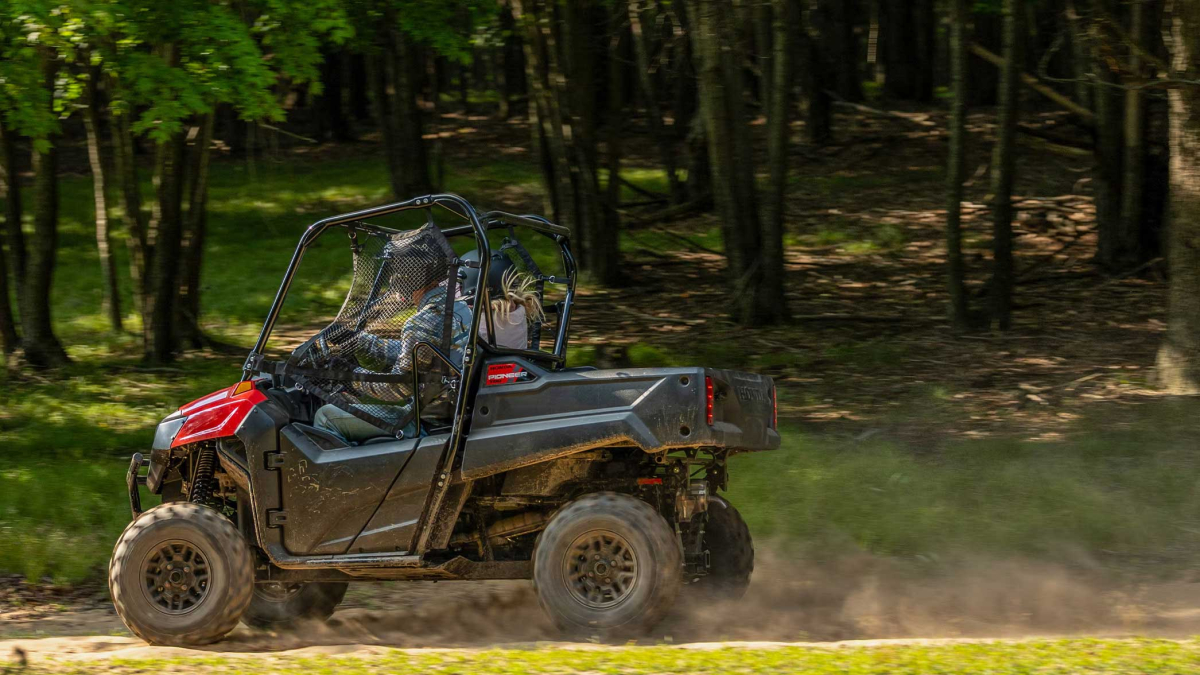
Spring is the natural reset point for Honda ATV ownership. After a winter of storage, or a fall and winter season of hard use, the components that keep your ATV running reliably have accumulated wear, absorbed moisture, and in some cases degraded simply from sitting. Addressing all of them at once, rather than replacing one item and discovering another issue a few weeks into the riding season, is the approach that produces the most consistent results and the fewest interruptions.
This guide covers every component that belongs in a Honda ATV spring service, how to identify the correct OEM parts for your specific model, and how to approach the work so your ATV is genuinely ready for whatever the season brings.
Why a Complete Spring Service Outperforms Piecemeal Maintenance
There is a practical case for addressing all service-interval items at the same time rather than spreading them across multiple sessions. Engine oil, air filter, spark plug, brake fluid, and drive system components all have wear and time-based service intervals. On a machine that has come through a winter storage period, several of these are likely due at the same time.
Replacing the oil filter without checking the air filter leaves an unknown in the intake system. Changing the spark plug without inspecting brake fluid addresses performance but not safety. A complete spring service eliminates those gaps in a single session and creates a documented baseline for the season: every wear-interval item was in known condition on a specific date, which makes diagnosing any issue that arises during the season more straightforward.
Genuine Honda OEM components restore your ATV to the factory specifications it was designed to operate within. An OEM oil filter is manufactured to the flow rate and filtration spec of your specific engine. An OEM spark plug carries the heat range Honda determined for your combustion chamber geometry. Starting the season with correctly-specified components means the machine performs the way it was designed to from the first ride.
Core Components of a Honda ATV Spring Service
Engine Oil and OEM Filter
Engine oil left in a stored ATV retains moisture and acidic combustion byproducts from the last ride of the previous season. Even oil that looks clean on the dipstick has been in contact with internal metal surfaces for months and should be replaced before the new season begins. Honda specifies oil viscosity by model and operating temperature range in the owner's manual; using the correct viscosity ensures adequate film thickness across the full range of operating temperatures your ATV will encounter.
The OEM oil filter is manufactured to the exact flow rate and filtration micron rating Honda specified for your engine. Correct filtration protects bearing surfaces and oil passages from the particulates that accumulate during the break-in of fresh oil.
Air Filter
The air filter is a component many riders check less frequently than they should, and its condition directly affects engine longevity. A restricted air filter reduces the air-fuel ratio, increasing fuel consumption and carbon buildup. More critically, a filter that has developed tears or gaps allows unfiltered air into the intake, and abrasive particles in unfiltered air cause accelerated cylinder and piston wear.
Honda ATVs use paper or foam filter media depending on the model and intended use. Paper filters are inspected and replaced; foam filters are cleanable but reach a point where replacement is more reliable than continued cleaning. Your owner's manual specifies the correct filter type and replacement interval. OEM Honda filters are manufactured to the exact flow and filtration specification for your model's intake system.
Spark Plug
The OEM spark plug for your Honda ATV carries a heat range specification determined by the combustion chamber geometry, compression ratio, and cooling design of your specific engine. A plug with the correct heat range runs hot enough to burn off deposits but cool enough to avoid pre-ignition. An incorrect heat range in either direction produces measurable consequences: a too-cold plug fouls; a too-hot plug risks detonation under load.
Inspecting a used spark plug before replacing it also provides useful diagnostic information. A plug with a light tan or gray center electrode indicates correct combustion. A black, sooty deposit indicates rich running or a restricted air filter. White or chalky deposits indicate lean running or coolant contamination.
Brake Fluid
Brake fluid absorbs moisture from the atmosphere through the reservoir and hose walls over time, a process that continues whether the ATV is ridden or stored. Moisture in brake fluid lowers its effective boiling point, which is the property that protects against brake fade under heavy use. Fluid that has been in service through a full season and a winter storage period should be replaced with fresh DOT-spec fluid as specified in your owner's manual, not simply topped up.
Inspect the reservoir fluid color as a first check: fresh fluid is clear to light amber; fluid that has darkened significantly has absorbed moisture and degraded inhibitor chemistry.
Coolant
On liquid-cooled Honda ATV models, coolant condition warrants inspection at spring service. Honda OEM coolant carries an inhibitor package formulated for aluminum engine components, which are used extensively in Honda ATV engines. Coolant that has gone brown or rust-colored has lost inhibitor effectiveness and should be flushed and replaced. Most manufacturers specify a two-year coolant change interval regardless of mileage, as inhibitor chemistry degrades with time even in a clean system.
Drive System
Inspect chain condition and tension on chain-drive models against the service manual specification. Check chain stretch by measuring a 20-link span and comparing to the service limit. Inspect front and rear sprocket teeth for hooking or asymmetric wear. Lubricate the chain with an appropriate lubricant after inspection. On shaft-drive models, check the gear oil level and condition in the final drive housing.
How to Identify the Right Honda OEM Parts for Your ATV
Honda's parts structure is organized by model year and variant, and differences between production years can affect oil filter dimensions, spark plug specification, and air filter part numbers. The most reliable approach is to confirm your exact model year and variant using the VIN before ordering any components.
Carolina Cycle's Honda ATV OEM parts catalog organizes components by model and assembly diagram, making it straightforward to confirm the correct part for each location on your specific machine. If you need help verifying compatibility or identifying components for a less common model year, our OEM parts support team can confirm the right components before you order.
DIY Spring Service vs. Professional Shop
The core spring service items — oil and filter change, air filter replacement, spark plug replacement, brake fluid change, and drive system inspection — are all within reach of a mechanically inclined Honda ATV owner with basic tools and a service manual.
A few items benefit from professional attention:
- Valve clearance inspection requires feeler gauges and methodical work through each cylinder. Consequences of an error are significant enough that first-time valve checks benefit from professional guidance.
- Carburetor service on older Honda ATV models with varnish deposits may require professional equipment for thorough results.
- Fuel system diagnostics on fuel-injected models with stored fault codes require a scan tool and model-specific knowledge.
Many Honda ATV owners handle consumables service at home and schedule professional attention for valve and fuel system checks annually.
Frequently Asked Questions
How do I know which oil viscosity my Honda ATV needs?
Your owner's manual lists the recommended viscosity grade for your specific model and temperature range. Honda generally specifies a 10W-40 or 10W-30 wet-clutch compatible oil for most ATV models, but this varies by engine design and year. Using the specified viscosity ensures correct film thickness at cold start and at operating temperature.
Should I replace the spark plug every spring?
Inspect it every spring and replace if it shows wear, fouling, or is at the replacement interval in your owner's manual. A plug showing electrode erosion, heavy deposits, or a gap beyond the service limit should be replaced with an OEM Honda plug of the correct heat range.
Is the Honda ATV air filter washable or disposable?
It depends on the model. Honda uses both foam and paper filter media across their ATV lineup. Foam filters are cleanable and reusable with the correct filter oil applied after cleaning. Paper filters are disposable. Your owner's manual specifies the correct filter type and service procedure.
How often should Honda ATV brake fluid be changed?
Most manufacturers recommend a change every one to two years regardless of mileage. After winter storage, checking fluid color and replacing if it has darkened significantly is appropriate even if it was recently changed.
Can I order Honda ATV OEM parts online from Carolina Cycle?
Yes. Carolina Cycle's Honda ATV OEM parts catalog is organized by model for easy identification. For questions about compatibility, contact our support team before ordering.
Start the Season With Every System in Order
A complete Honda ATV spring service with genuine OEM components means the first ride of the season is built on a solid foundation. Carolina Cycle has carried genuine OEM parts for Honda and the other major powersports brands since 1970.
Browse the Honda ATV OEM parts catalog to get started, or reach out to our support team for guidance on your specific model.
