


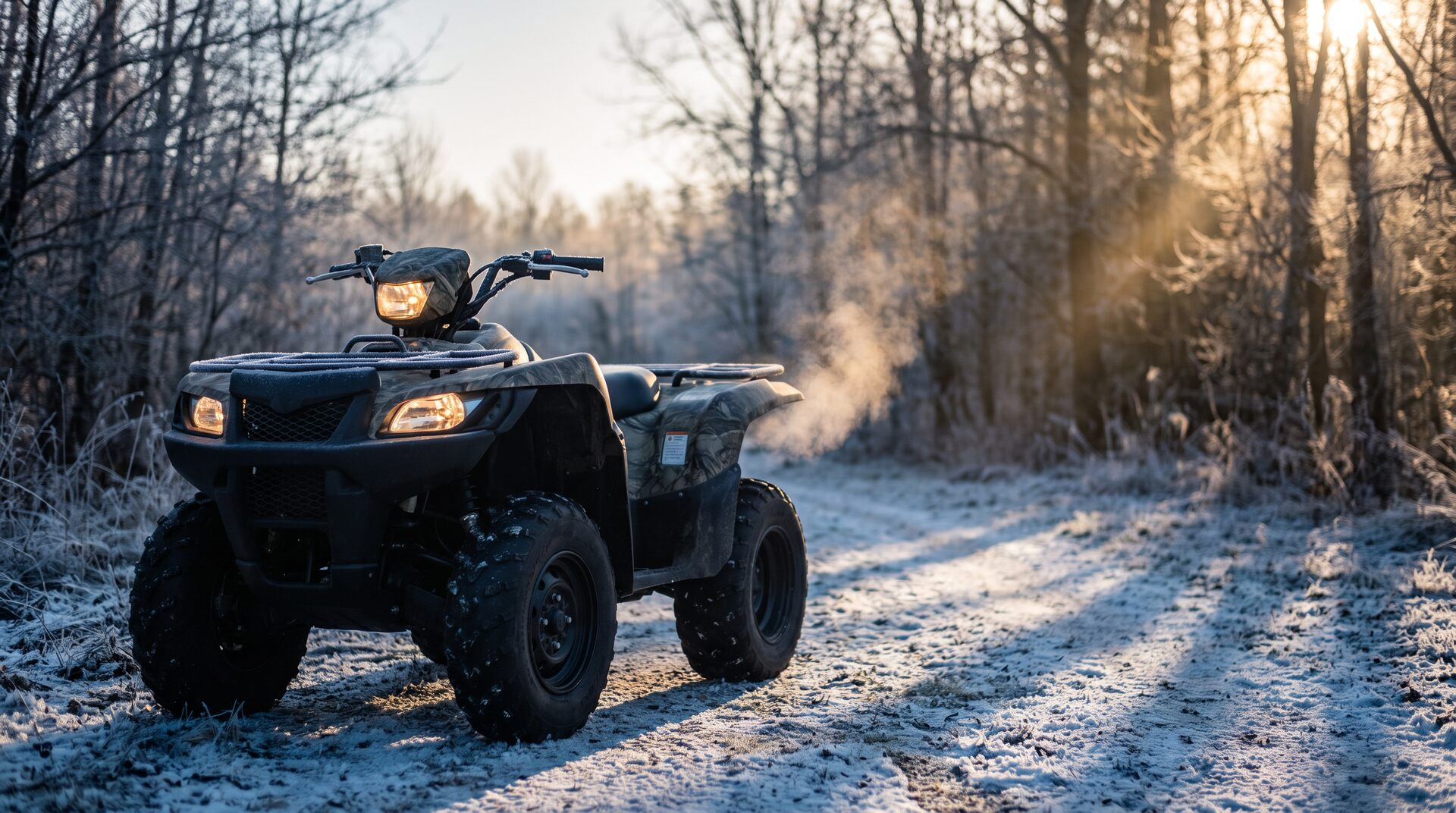
When a Suzuki ATV acts up in the cold, it usually tells you how. It cranks slowly. It stumbles for the first minute. The lights look dim. The brake lever feels soft, or the throttle sticks. Each of those symptoms points to a short list of part categories, and knowing the list saves time.
Carolina Cycle sells genuine OEM parts online for Suzuki ATVs. Our owners also run Waynesville Cycle Center, an in-person dealership and service center in Western North Carolina, in business since 1970. This page is organized by symptom. Find the one you notice, then see which categories to inspect and what to check in the catalog. We don't name specific models or features, because they differ by model and year. Your owner's manual decides the details, so use this page as a map and the manual as the rulebook.
Why Cold Changes How an ATV Runs
Cold thickens fluids, slows chemical reactions in a battery, and stiffens rubber, grease, and cables. Fuel is also harder to vaporize on a cold morning. None of that is a defect. It's physics, and it puts every worn part under more stress than it feels in summer.
That's why a small weakness often shows up first in winter. A battery that was marginal in August fails in January. A cable that was slightly dry now sticks. Treat the first cold snap as a free inspection.
Symptom: Hard Starting
Battery and Terminals
A slow crank usually points to the battery. Cold lowers what a battery can deliver, and an older one may not keep up. Check the terminals for corrosion and make sure the cables are snug. If the battery is several seasons old, have it tested, and replace it with a genuine one made for your model when it's due. A maintainer between rides helps keep it charged.
Spark Plugs and Ignition
Worn spark plugs make a cold start harder. Look at the plugs and plug caps for wear, cracks, or fouling, and compare them with the type and gap your manual lists. Check the catalog for the plug listed for your model and year.
Air Filter and Fuel Filter
A clogged air filter starves the engine, and a restricted fuel filter can do the same. Both are wear items. Inspect them, replace what's dirty, and order the ones listed for your model. Fuel system repairs belong with a dealer or qualified technician.
Symptom: Rough Idle on Warm-Up
Fluids and the Manual's Warm-Up Advice
A rough idle in the first minutes can come from thick oil, a weak spark, or a dirty intake. Start with the basics. Check the oil level and the grade your manual lists for the temperatures you ride in, and follow its warm-up advice.
Intake and Breather Parts
Look at the air filter housing, the intake boot, and any breather hoses for cracks, loose clamps, or damage. A leak in an intake path can upset the way an engine idles. Replace damaged hoses and clamps with genuine parts made for your model.
When to Hand It to a Dealer
If the idle stays rough after the engine warms up, or if it gets worse over a few weeks, stop guessing. Your dealer can diagnose it. Our job is to help you find the right genuine parts once you know what's needed.
Symptom: Weak or Dim Lights
Bulbs, Lenses, and Seals
Dim lights can come from aging bulbs, but check the lens first. Fog or moisture inside a lens points to a bad seal. Cracks let water in, and water shortens a bulb's life. Replace damaged lenses and seals with the ones listed for your model.
Connectors and Grounds
Corrosion on a connector or a loose ground adds resistance and makes lights flicker or dim. Look at plugs and cable ends, and clean what you can. Wiring repairs go to a dealer or qualified technician.
Charging and Battery Health
A weak battery or charging system can dim lights at idle. If the lights brighten when the engine speeds up, mention that to your dealer. Our article on choosing between OEM and aftermarket ATV parts explains why parts built for your machine matter, especially for electrical items.
Symptom: Soft or Slow Brakes
Pads and Rotors
Brakes that feel weak in the cold may simply be worn. Check pad thickness and look at the rotors for scoring, rust, or uneven wear. Pads and rotors are specific to a model and year, so use the catalog to find the ones listed for your machine.
Lines, Fluid, and Cables
A spongy lever can point to old fluid or air in the system. Brake fluid absorbs moisture over time, and your manual lists when to replace it. Brake hydraulics are a safety system, so leave bleeding, fluid service, and line repairs to your dealer or a qualified technician.
Frozen Brakes After a Wet Ride
Wet brakes can freeze if the machine sits in the cold. Test the brakes gently when you start. If a brake drags or sticks, don't force it. Have it checked.
Symptom: Sluggish Drive
Drivetrain Fluids
A machine that feels slow to pull may have thick fluids in the gearcase or differentials. Check each one against the schedule in your manual, and replace what's due with the type listed for your model.
Boots, Seals, and Joints
Cold makes rubber brittle. Look at driveshaft boots, seals, and joints for splits and leaks, since a small tear can let in water and grit. Replace damaged parts with genuine components, and grease the points your manual lists.
Tires and Pressure
Tires lose pressure as the temperature drops, and soft tires feel sluggish. Check them cold and set them to the figure in your manual. Look at tread and sidewalls too. Our guide to ATV mud season protection and recovery shows what thawing ground does to tires and wear parts.
Symptom: Frozen or Stiff Controls
Cables and Levers
Throttle, brake, and shift controls can stiffen when grease thickens or water gets into a cable. Work each control through its full travel. A cable that feels rough or sticky is a candidate for replacement, and the catalog lists the cables for your model and year.
Boots, Grips, and Switches
Check that boots and covers are intact, since a torn boot lets in water that freezes. Look at grips, switches, and the throttle housing for cracks or looseness. A control that sticks is a safety problem, so don't ride until it moves freely.
Fasteners and Small Hardware
Vibration and temperature swings loosen bolts. Walk around the machine and check what you can reach. Replace worn or rusty hardware with parts made for your model.
How to Use the Catalog for Any Symptom
Choose Your Model and Year
Open the Suzuki ATV parts catalog and pick your exact model and year. Parts change over time, so your selection decides what appears.
Use the Diagram and Parts List
Find the system for your symptom, such as electrical, brakes, or controls. Open the diagram, match the position to the parts list, and read the part number from the list. Check left or right, front or rear, and quantity.
Check the Catalog and Ask Us
We don't claim that a given part exists for a given machine. Check the catalog for your model and year, and ask us if the listing is unclear.
Frequently Asked Questions
Why does my Suzuki ATV start slowly in cold weather?
The battery is the usual suspect. Cold reduces its output, so have it tested and check the terminals.
Is a rough idle on warm-up normal?
A brief stumble can happen in the cold, but one that lasts or worsens needs a look. Check the filters and plugs, then ask your dealer.
Can I repair brake or fuel problems myself?
Brake hydraulics, wiring, and fuel system repairs go to a dealer or qualified technician.
Can Carolina Cycle install the parts I order?
No. We sell genuine OEM parts online, and your dealer handles installation and service.
How do I find the right part for my model?
Pick your model and year in the catalog and use the diagram and parts list. Send us a question if anything looks unclear.
Match the Symptom to the Part
Cold weather doesn't break a good machine. It exposes what was already tired. Start with the symptom, check the categories above, and confirm each part in the catalog for your model and year.
When you need help finding genuine parts for your Suzuki, contact our team through our OEM parts support page. Carolina Cycle serves riders online, and we'll help you find the right components.
