


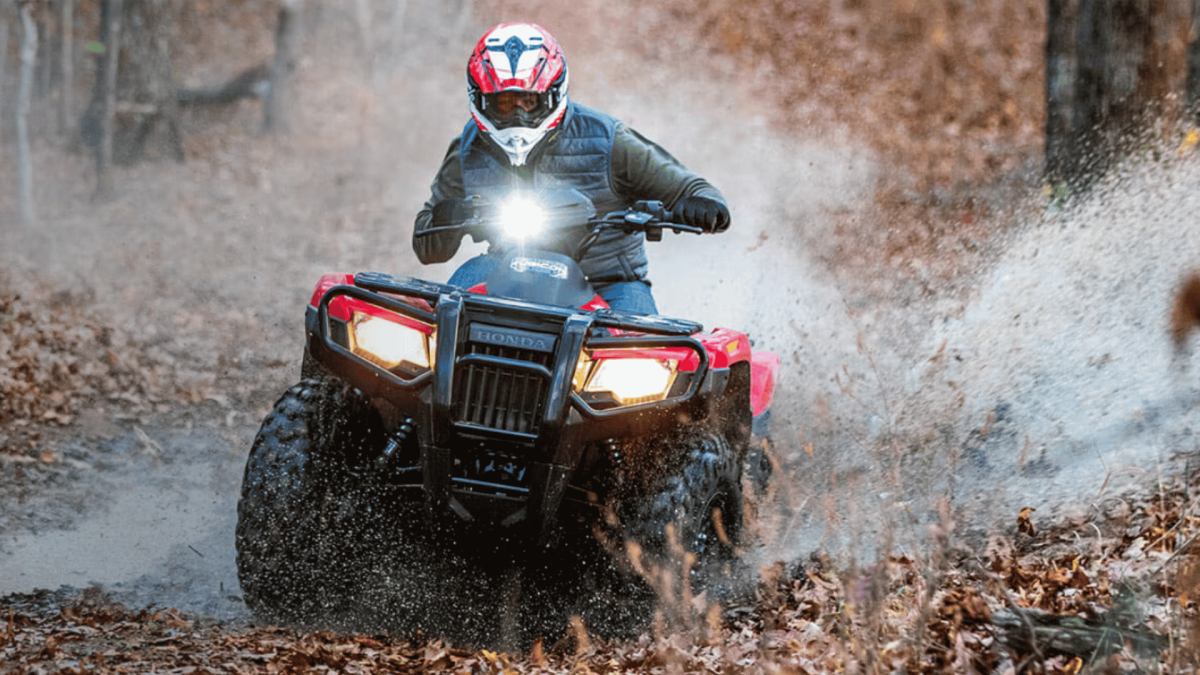
Late-season trail riding has a character all its own. As fall deepens toward winter, the trails change, the weather turns, and the conditions grow more demanding, but the riding can be some of the most rewarding of the year for those prepared for it. Since 1970, Carolina Cycle has helped riders take on challenging conditions with the right genuine protection for machine and rider alike.
This page covers how late-season conditions change trail riding, the protection that keeps you going as the weather turns, and how to prepare your ATV for the toughest part of the riding year. With the right setup, the late season opens up riding that fair-weather riders miss entirely.
How Late-Season Conditions Change the Trail
The trail in late fall is a different place than it was in summer. Cold air and wet weather replace the heat and dust, fall rain brings back the mud that dried up months ago, and fallen leaves hide obstacles and the trail surface beneath them. Shorter days mean you're often riding in low light, and early cold snaps can add frost or worse to the mix.
These changes ask for different preparation than summer riding did. Protection shifts from managing heat and dust toward handling cold, wet, and reduced visibility, and the returning mud puts sealing back in focus. Matching your machine and your gear to these conditions is what lets you keep riding comfortably and safely as the season winds down.
Protection Against Weather and Cold
Staying protected from the elements is central to late-season riding. Handguards shield your hands from cold wind and the brush that reaches across narrowing trails, which matters more as temperatures drop and bare hands lose dexterity. Keeping the wind and weather off you helps you stay warm, comfortable, and in control through a cold ride.
You can find genuine protective components for your machine in our Yamaha ATV parts catalog and Suzuki ATV parts catalog. Whatever you ride, genuine components designed for your specific model provide the fit and protection that late-season conditions demand.
Sealing Against Returning Mud and Moisture
Fall rain brings the mud back, and with it the water and moisture that late-season riding constantly encounters. Keeping that mud and water out of the places it can do damage matters just as much now as it did in spring. Sound seals and protective components help keep your bearings, drivetrain, and electrical connections working through wet, muddy conditions.
Staying ahead of moisture is a matter of both protection and maintenance. Genuine seals and guards maintain the barriers that keep water out, and a good post-ride routine of cleaning off the mud and checking for intrusion keeps small problems from taking hold. In the wet late season, that consistent attention pays off.
Visibility for Shorter Days
The late season's short days mean much of your riding happens in low light. Good lighting lets you see the trail and its hazards, and be seen by others, when daylight is scarce. Confirming your lights work correctly and provide the illumination you need is basic late-season preparation, and genuine lighting components deliver dependable performance in the dark.
Visibility is a safety matter as the days shrink. Being able to spot the obstacles that leaves and low light conspire to hide, and making sure others can see you, keeps late-season riding safe. It's a simple thing to check and an important one as the season progresses.
Protecting Against Hidden Obstacles
Late-season trails hide their hazards. Fallen leaves cover rocks, roots, and ruts, and early cold can add slick spots that weren't there before, so the trail surface holds surprises that summer riding didn't. Riding with awareness of what the leaves might conceal, and keeping your machine's protection in good order, guards against the impacts these hidden obstacles can cause.
A cautious approach matters as much as any component here. Slowing down where leaves are deep, reading the trail carefully, and giving yourself room to react all help you avoid the obstacles you can't see. Protection and awareness together are what keep late-season riding from turning an unseen rock into a ruined day.
Preparing Rider and Machine for the Cold
Cold weather asks for its own preparation. Your battery works harder in the cold and a weak one may struggle to start the machine on a frigid morning, so confirm it's healthy before you rely on it. Check that your fluids are appropriate for the temperatures and that the machine is running well, since cold conditions leave less margin for a marginal system.
The rider needs preparation too. Dressing for the cold in layers, keeping your hands and core warm, and knowing your limits in low temperatures all matter for safe late-season riding. A prepared rider on a well-prepared machine can enjoy the trails long after the fair-weather crowd has parked for the year.
Choosing the Right Protection
Start with your exact machine and year so every component fits and functions correctly, then prioritize the protection your late-season conditions call for. If cold and wind are your challenge, hand and weather protection lead the list, and if returning mud is the issue, sealing and guards come first. Matching your protection to the conditions you actually ride makes it most effective.
Genuine components are the dependable choice because they're made to fit your specific machine and hold up to demanding conditions. When you're unsure what your machine needs for the late season, tell us your model and how and where you ride, and we'll help you set it up for the conditions ahead.
Frequently Asked Questions
How is late-season riding different from summer?
Cold, wet weather replaces heat and dust, fall rain brings mud back, fallen leaves hide obstacles, and short days mean more low-light riding. Late-season riding shifts protection toward cold, wet, and visibility.
What protection matters most in cold, wet conditions?
Hand and weather protection for the rider, sealing against returning mud and moisture for the machine, and good lighting for short days are the priorities. Match them to the conditions you ride most.
Why is my ATV harder to start in the cold?
Batteries work harder and deliver less in cold temperatures, so a weak battery that was fine in summer may struggle on a frigid morning. Confirm your battery is healthy before relying on it in the cold.
Do fallen leaves really hide trail hazards?
Yes. Leaves cover rocks, roots, and ruts, and can make the surface slick when wet, so the trail holds surprises that summer didn't. A cautious pace and sound protection guard against the impacts they can cause.
Can Carolina Cycle help me prepare for late-season riding?
Absolutely. Tell us your machine and how and where you ride, and we'll help you find the genuine protection and components that keep you going as the season turns cold and wet.
Keep Riding as the Season Turns
Late-season trail riding rewards those prepared for it with trails the fair-weather crowd never sees. Protect yourself and your machine against the cold and wet, keep your visibility and sealing in good order, and ride the changing conditions with awareness. Do that, and the toughest part of the riding year becomes some of the most rewarding.
When you're ready to prepare for late-season riding, contact our team through our OEM parts support page. We've helped riders take on tough conditions since 1970, and we'll make sure your machine has the protection the season demands.
