


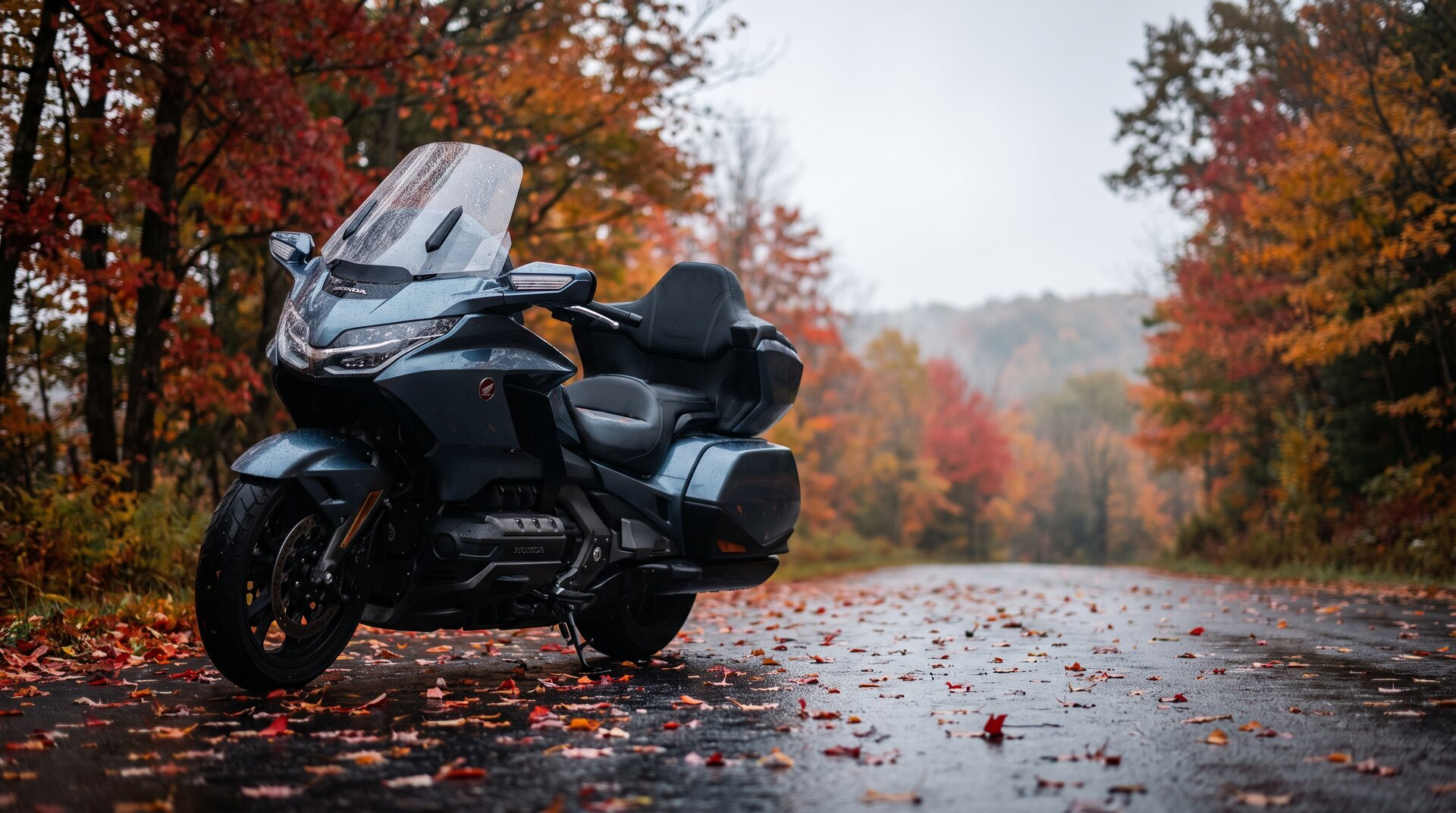
The thermometer reads 38 degrees when you leave the driveway and 62 by the time you reach the next county. Fall riding is a lesson in swings, and the rider who stays comfortable across them is the one who keeps riding into November. Since 1970, Carolina Cycle has supplied genuine parts to riders across the Carolinas, and when the weather turns, the parts that block wind, shed rain, and keep the bike lit and charged do the quiet work of keeping you in the saddle.
This page is about comfort and protection rather than a service checklist. It covers how wind and rain protection works on your Honda, which controls and contact points matter in the cold, how tires behave on cool, wet pavement, and what keeps your lights and charging system dependable when the days get short. You will also find a few ways to choose the right genuine part for your model.
Why Fall Weather Asks More of Your Honda
Summer riding forgives a lot. The air is warm, the pavement is grippy, and a little wind feels good. Fall takes that away. Temperatures drop quickly at speed, because moving air steals heat from a rider far faster than the thermometer suggests. Damp mornings, drizzle, and leaf-covered corners reduce traction, and the sun sets while you are still on the road.
None of this is a reason to park the bike. A rider who is warm, dry, and visible reacts faster and rides longer, and the genuine parts below each solve one piece of that problem.
Wind Protection: Windscreens and Fairing Parts
Wind is the biggest comfort factor in cool weather, and the first line of defense is whatever sits in front of you. A windscreen, fairing panel, or fairing lowers section redirects airflow away from your chest and helmet, which cuts both chill and fatigue on long rides. How well it works depends on its shape and height for your specific model, and on whether it is in good shape.
A cracked, scratched, or badly hazed windscreen scatters light and hurts visibility, especially at dusk. Genuine Honda windscreens and fairing components are made to fit your model, so the airflow works the way the engineers intended. Browse your model in our Honda motorcycle parts catalog.
Grips, Levers, and Controls in the Cold
Cold hands are slow hands. When your fingers go numb, you brake later and smoother inputs turn jerky, so the contact points deserve attention before the weather turns. Worn grips lose their texture and cushion, which makes your hands work harder in gloves and in the wet. Torn or hardened rubber is a sign to replace them.
Levers and cables matter, too. Cold stiffens grease and can make clutch and brake levers feel heavy or sticky, and a cable that is frayed or dry will bind first on a frosty morning. Check lever pivots for smooth travel and look over cables for kinks and damage. Ask us whether your model has genuine hand-comfort options before you buy anything.
Tires and Traction on Cool, Wet Pavement
Rubber stiffens as the temperature falls, and a cold tire grips less than a warm one. That is not a defect, it is physics, and it means the first few miles of a chilly ride need gentle inputs. Wet leaves, damp shade, and morning frost then stack on top of it. Tires in good shape matter more in fall than in any other season.
Look at tread depth and the wear pattern, and check the sidewalls for cracks or age. Check pressure cold, since falling air temperature drops it, and use the figure in your owner's manual rather than the number on the tire sidewall. When your tires are worn or aging, replacing them with genuine parts for your model is the surest route to the grip your bike was designed around. Our guide on riding your street bike in the rain covers technique that helps on wet pavement.
Rain Protection: Keeping Water Where It Belongs
A little rain is a fact of fall riding, and good protection depends on more than your jacket. Your Honda has parts that keep water out of places it should not go. Fender and mudguard pieces, splash guards, and mounting hardware all shape how much spray reaches you and the bike. Damaged pieces let road spray reach electrical connectors, chain, and brakes.
Pay attention to sealing. Rubber boots, caps, and seals on connectors keep moisture out of the wiring, and a cracked or missing one is an invitation to corrosion. Our article on OEM components for wet weather motorcycle riding covers more of the parts that matter when the roads are wet.
Lighting and Visibility as the Days Shorten
By late October, the commute home happens in the dusk. Being seen matters as much as seeing, and a dim or failing bulb makes you easy to miss. Check your headlight, tail light, brake light, and turn signals, and aim the headlight so it lights the road without dazzling oncoming traffic.
Look at the lenses as well. Cloudy, cracked, or water-fogged lenses cut output and signal a seal that is no longer doing its job, and a genuine lens, seal, or bulb restores the lighting the way the bike was built.
Charging System and Battery in Cool Weather
Cold weather is hardest on the battery, and the heavier electrical load of fall riding makes it worse. Lights run longer, and any heated gear or accessories you add draws extra power. A battery that was marginal in summer can leave you stuck on the first cold morning, and a weak charging system will not keep a good one topped up.
Check the battery terminals for corrosion and tightness, and have the battery load-tested if it is more than a few seasons old. If you add heated gear, make sure your charging system has the capacity for it, which your owner's manual or your dealer can confirm. When it is time to replace it, a genuine battery for your Honda is built for your bike's electrical needs.
Choosing the Right Genuine Parts for Your Honda
Start with your exact model and year, because windscreens, fairings, and controls vary widely across the Honda lineup. Then start with whatever bothers you most: wind, cold hands, or the dark commute.
Not every item is a do-it-yourself job. Brake parts, wiring, and anything that changes how the bike handles belong with your dealer or a qualified technician. Carolina Cycle sells genuine OEM parts online, and your dealer handles the installation. For the parts-quality question, our guide on choosing between OEM and aftermarket parts lays out why fit matters.
Frequently Asked Questions
What is the best way to stay warm on a fall motorcycle ride?
Block the wind first, because moving air chills you faster than cool air alone. A properly fitted windscreen or fairing, layers, and warm hands make the biggest difference.
Do windscreens and fairing parts really change comfort?
Yes, within limits. They redirect airflow away from your chest and helmet, which reduces chill and fatigue, but the benefit depends on the part being the right shape for your model.
Why do my tires feel slippery on cool mornings?
Cold rubber grips less than warm rubber. Check pressure cold, replace worn tires, and ride gently until the tires warm up.
How do I know if my battery can handle the cold?
Have it load-tested. A battery that barely made it through summer is likely to struggle with the first cold start, especially if you add heated gear.
How do I find the right genuine parts for my Honda?
Start with your exact model and year, then check your owner's manual. Tell us what you ride and we will help you confirm the right genuine components.
Ride Comfortably Into Winter
Fall riding rewards the rider who prepares for it. Manage the wind, keep your hands working, trust your tires, and make sure your Honda is visible and electrically sound. Do those things, and cool, wet weather becomes part of the ride instead of a reason to skip it.
When you are ready to line up parts for your Honda, contact our team through our OEM parts support page. We have supplied genuine parts to Honda riders since 1970, and we will help you choose the right components for the season.
