


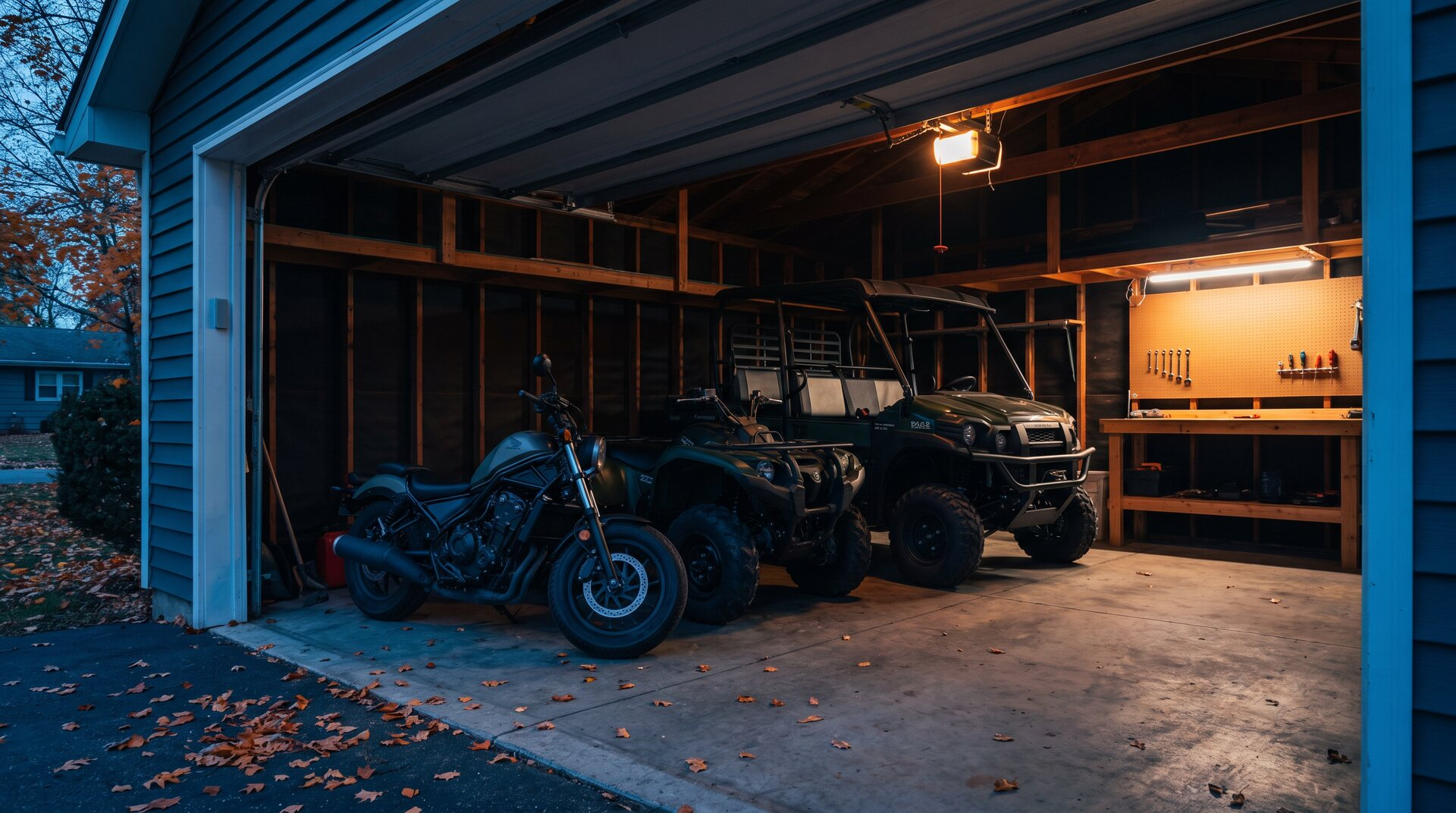
Before you buy a single part this fall, answer one question: what will this machine do between now and spring? A motorcycle you commute on in December needs a very different plan than a side-by-side that comes out twice for hunting, and both differ from an ATV that goes under a cover in November. Sort your vehicles by that plan first, and the maintenance list gets shorter and much easier to follow.
Carolina Cycle sells genuine OEM parts online for Honda, Kawasaki, Suzuki, and Yamaha motorcycles, ATVs, and side-by-sides. Our owners also run Waynesville Cycle Center, an in-person dealership and service center in Western North Carolina, in business since 1970. This hub page walks through a decision guide, a master timeline, what motorcycles, ATVs, and side-by-sides share, where they differ, and the problems owners run into most often. Use it to plan your whole garage in one sitting.
Step One: Choose Your Winter Plan
Every machine falls into one of three groups. Be honest about how you will use each one.
Plan A: Ride Through Winter
If a vehicle keeps working all winter, as a commuter bike, a farm ATV, or a utility side-by-side, your priority is dependability in the cold. That means a healthy battery, fresh fluids, good tires, sound brakes, and reliable lighting.
Plan B: Occasional Winter Rides
If the machine comes out on mild days or for a weekend trip, you are in the middle. It needs the basics done in fall, plus a plan for the long gaps between rides. A battery on a maintenance charger and fuel that will not go stale matter most here.
Plan C: Full Storage
If the machine goes away until spring, the goal is protection while it sits. Fresh oil, fuel care, a battery you maintain, a clean machine, and protection from moisture and pests lead the list. Do your replacements now, while the machine is in front of you and you can see what is worn.
The Master Timeline: Early Fall, Mid Fall, First Freeze
A timeline keeps you from cramming everything into one cold Saturday.
Early Fall: Inspect and Order
While the weather is still mild, walk around each machine and write down what you see. Compare your service history to the schedule in each owner's manual. Order genuine parts early, because fall is when many owners shop at once. Look at tires, brake pads, belts or chains, lights, and anything that leaked or rattled this summer.
Mid Fall: Service and Repair
Now do the work. Change fluids and filters when your manual says they are due, replace worn items, and clean thoroughly. Washing a machine before storage removes mud, salt, and debris that hold moisture against metal. Anything that needs a professional, such as brake hydraulics or wiring, should go to your dealer while shops still have room on the calendar.
First Freeze: Final Steps
When the forecast shows freezing temperatures, finish your plan. For Plan A, check tire pressure cold and confirm your lights work. For Plan B and Plan C, treat the fuel, connect the battery maintainer or remove the battery, cover the machine, and park it somewhere dry.
What Motorcycles, ATVs, and Side-by-Sides Share
A handful of systems matter on every machine you own. Once you know them, the whole fleet is easier to manage.
- Battery: Cold weather is hard on every battery, and the same maintenance charger approach works across machines.
- Fluids and filters: Oil, coolant, and brake fluid follow your manual's schedule on every type.
- Fuel: Stale fuel causes starting trouble on any engine, so fuel care applies across the board.
- Tires: Pressure drops with temperature, and tread and age matter on every machine.
Where the Machines Differ
The differences matter just as much as the similarities, and they are where owners most often miss something.
Motorcycles: Chain, Lights, and Tires
Street riders face road debris, wet leaves, and dusk riding, so tires, lighting, and the chain or drive system lead the list. Motorcycles have two contact patches, which makes tire condition and pressure especially important in the cold. Browse genuine parts in our Honda motorcycle parts catalog, Yamaha motorcycle parts catalog, or Suzuki motorcycle parts catalog.
ATVs: Mud, Drive Systems, and Wear
ATVs spend life in mud, water, and dust, so washing, greasing as your manual directs, and inspecting boots, seals, and drive components deserve extra time. Our article on ATV mud season protection and recovery explains what wet, muddy riding does to these parts. Find genuine parts in the Yamaha ATV parts catalog, Kawasaki ATV parts catalog, or Suzuki ATV parts catalog.
Side-by-Sides: Cabs, Lighting, and Heat
Side-by-sides carry passengers and gear, and winter use often means enclosures and heat. They also run longer hours with higher electrical loads, so battery and lighting matter. Our guide to UTV headlights covers why lighting deserves attention before dark mornings arrive. We have separate pages on Kawasaki side-by-side cab enclosures and heat systems, a Suzuki ATV storage and winter preparation page, a Yamaha motorcycle fall service kit page, and a Honda motorcycle fall weather page, if you want to go deeper on a specific machine.
Common Problems and Solutions
Most winter troubles show up in the same few places. These are the ones we hear about most.
The Machine Will Not Start After Sitting
A weak battery or stale fuel is the usual cause. Prevent it with a battery maintainer and fuel care before storage. If it happens anyway, have the battery tested and the fuel system checked by your dealer.
Brakes Feel Soft or Grab After Storage
Moisture in brake fluid and surface rust on rotors cause both complaints. Check pads and fluid condition before you store, and have your dealer inspect anything that feels wrong. Brake hydraulics are not a job to guess at.
Rodents and Moisture Found Inside
Mice love a quiet, warm engine bay or air box. Store machines in a clean, dry place, keep food and bird seed away, and look for chewed wiring before you ride in spring. Replace damaged parts with genuine components and have wiring repairs done by a qualified technician.
Cracked or Foggy Lights, and Torn Boots
Cold and moisture find the weak spots in lenses, seals, and rubber boots. Look at them during your mid-fall walk-around, because small cracks let moisture in and grow into bigger repairs.
Choosing the Right Genuine Parts
Start with the exact model and year of each machine, then check your owner's manual for what it calls for. Genuine OEM components are made to fit your model, which matters most for filters, gaskets, seals, and brake parts. For a deeper look at why fit matters, our guide on choosing between OEM and aftermarket parts lays it out.
Carolina Cycle does not install parts or service machines. Your dealer handles that work, and we are happy to help you identify the right components first.
Frequently Asked Questions
When should I start winter preparation?
Early fall. Inspecting and ordering while the weather is mild leaves time for service before the first freeze.
Do I need a battery maintainer?
For any machine that sits more than a few weeks, it is a common and sensible choice. Check your owner's manual and ask your dealer what fits your battery type.
Is fall service different for an ATV than for a motorcycle?
The basics are the same, but ATVs need extra attention to mud, water, seals, and drive components, while motorcycles lean harder on tires, chain or drive, and lighting.
Should I replace worn parts in fall or spring?
Fall works well. You can see what is worn, order without a rush, and wake the machine in spring with the work done.
Can Carolina Cycle service my machine?
No. We sell genuine OEM parts online, and your dealer handles installation and service. Contact us and we will help you find the right parts.
Plan Once, Ride Easy All Winter
Start with the plan for each machine, follow the timeline, and focus on what each type needs. Handle the shared basics across the garage, give each machine its own special attention, and leave the hydraulics and wiring to the professionals.
When you are ready to build your parts list, contact our team through our OEM parts support page. We have supplied genuine parts to powersports owners for more than fifty years, and we will help you match the right components to each machine.
