


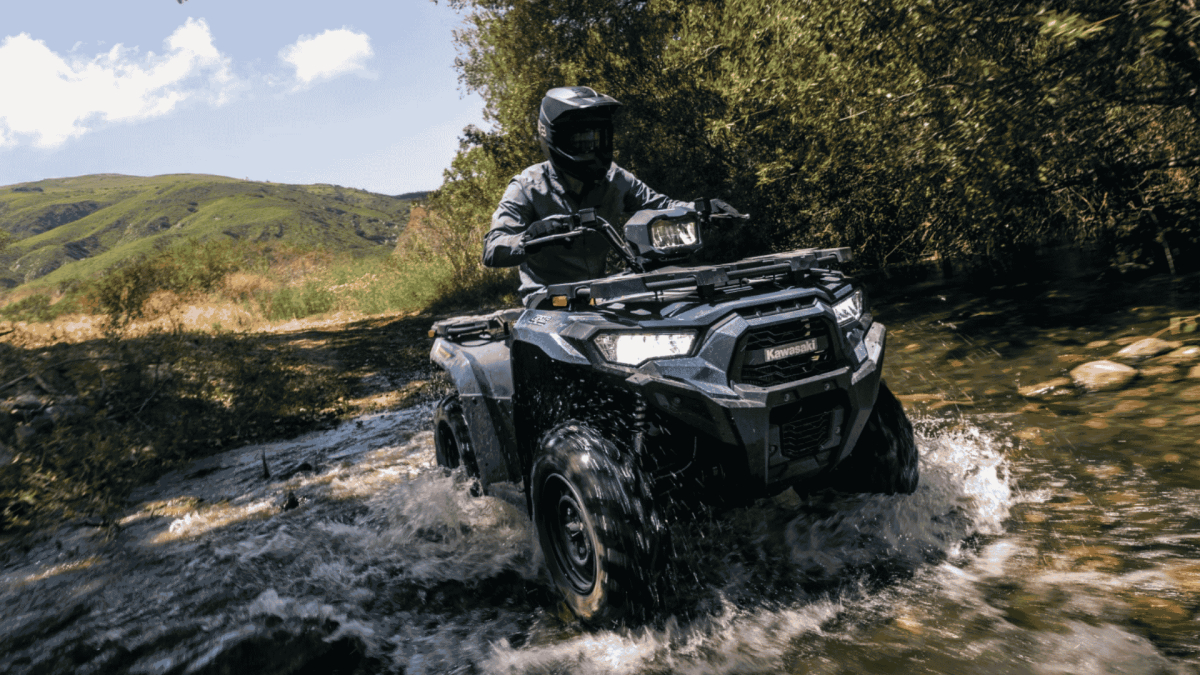
Water crossings and deep mud are where a lot of ATV adventures happen, and they're also where a lot of engines meet an expensive end. Your Kawasaki's air intake is the path of least resistance for water trying to reach the engine, so protecting it is one of the most important things you can do before riding wet terrain. This page covers how intake protection works, why it matters, and how genuine OEM components keep your machine breathing clean, dry air.
Intake protection isn't only about bolting on a snorkel. It's about understanding how your Kawasaki draws air, keeping every part of that path sealed and intact, and knowing the limits of what your setup can handle. Get those right and you'll ride wet conditions with a lot more confidence.
How Your ATV's Air Intake Works
Your engine needs a steady supply of clean, dry air to run, and it pulls that air through an intake path that ends at the air filter and airbox. Under normal riding, that system does its job quietly. In water and deep mud, it becomes the most vulnerable route into the engine.
The intake draws air, and if the intake opening sits low enough to reach water, it can draw water too. Even short of full submersion, splashing and spray can introduce moisture that the filter and airbox aren't meant to handle in volume. Keeping that path intact and routed sensibly is the foundation of intake protection.
Why a Flooded Intake Is So Damaging
When water reaches the engine through the intake, the consequences are severe. Liquid doesn't compress the way air does, so a cylinder that fills with water can't complete its stroke. The result, often called hydrolock, can bend internal components and cause major engine damage in an instant.
That's why intake protection is treated so seriously among riders who tackle water. The cost of a raised, sealed intake path is trivial next to the cost of the damage it prevents. Understanding this risk is the reason to take your intake seriously before the first crossing.
Components That Keep the Intake Sealed
A snorkel raises the intake opening to a higher, safer point, but it's only as good as the sealing around the rest of the system. The ducts, boots, clamps, and seals along the intake path all have to be intact, or water finds the weak point and gets in anyway.
Genuine OEM intake components matter here because fitment determines whether a connection actually seals. An intake duct or boot made to your Kawasaki's exact dimensions clamps down properly and holds, while a loose or ill-fitting substitute can let water past at the very join you were counting on. You can find fitment-matched intake and airbox components in our Kawasaki ATV parts catalog.
A clean, correctly seated air filter is part of the picture too. The filter is your last line of defense against grit and moisture reaching the engine, so a genuine filter in good condition does real work. Inspect it regularly, especially after muddy or wet rides.
Assessing Crossing Depth
Even a well-protected intake has limits, and knowing them keeps you out of trouble. Before you commit to a crossing, it's worth taking a moment to read the water rather than charging in.
Walk the crossing if you can, checking depth and footing, and compare that depth to where your intake and other vulnerable components sit. Account for the bow wave your machine pushes, which raises the effective water level around the ATV as you move. When in doubt, choose a shallower line or a different route, because a confident guess that turns out wrong is how engines get damaged.
If you do ride water regularly, build a habit of inspecting your intake sealing and filter afterward. For more hands-on maintenance you can tackle yourself, our guide to easy DIY UTV repairs covers the kind of work involved in keeping these systems healthy.
Frequently Asked Questions
Does a snorkel alone make my Kawasaki waterproof for crossings?
No. A snorkel raises the air intake to a safer height, but the engine breathes through a whole path of ducts, boots, and seals that all need to be intact and properly clamped. Water will find any weak join, so the sealing around the entire intake matters as much as the snorkel itself. Other systems on the machine also have their own water considerations.
What is hydrolock and why is it so serious?
Hydrolock happens when water enters a cylinder through the intake. Because water doesn't compress like air, the piston can't complete its stroke, which can bend connecting rods and cause severe internal damage. It can occur almost instantly during a deep crossing, which is exactly why intake protection is worth taking seriously.
How do I know how deep I can safely cross?
Compare the water depth to where your intake and other vulnerable components sit, and remember that your machine pushes a bow wave that raises the water level around it as you move. Walking the crossing first to check depth and footing is the safest approach. If the depth is uncertain or close to your limits, choose a different line.
How often should I check my air filter if I ride in wet conditions?
After any wet or muddy ride, give the filter a look, since that's when contamination is most likely. A clean, genuine filter that's correctly seated is your last barrier against grit and moisture reaching the engine. Replacing a fouled filter promptly keeps that protection intact.
Protect Your Kawasaki Before the Next Crossing
Intake protection is one of the highest-value preparations you can make for wet-terrain riding. A raised intake, fully sealed ducts and boots, and a clean filter together keep water out of your engine, and genuine OEM components give you the fitment that makes those seals actually hold.
Pair the right hardware with smart judgment about crossing depth, and water becomes a manageable part of the ride rather than a gamble. When you're ready to match intake and airbox components to your Kawasaki, our team can help you find the correct genuine parts. Reach out anytime through our OEM parts support page.
