


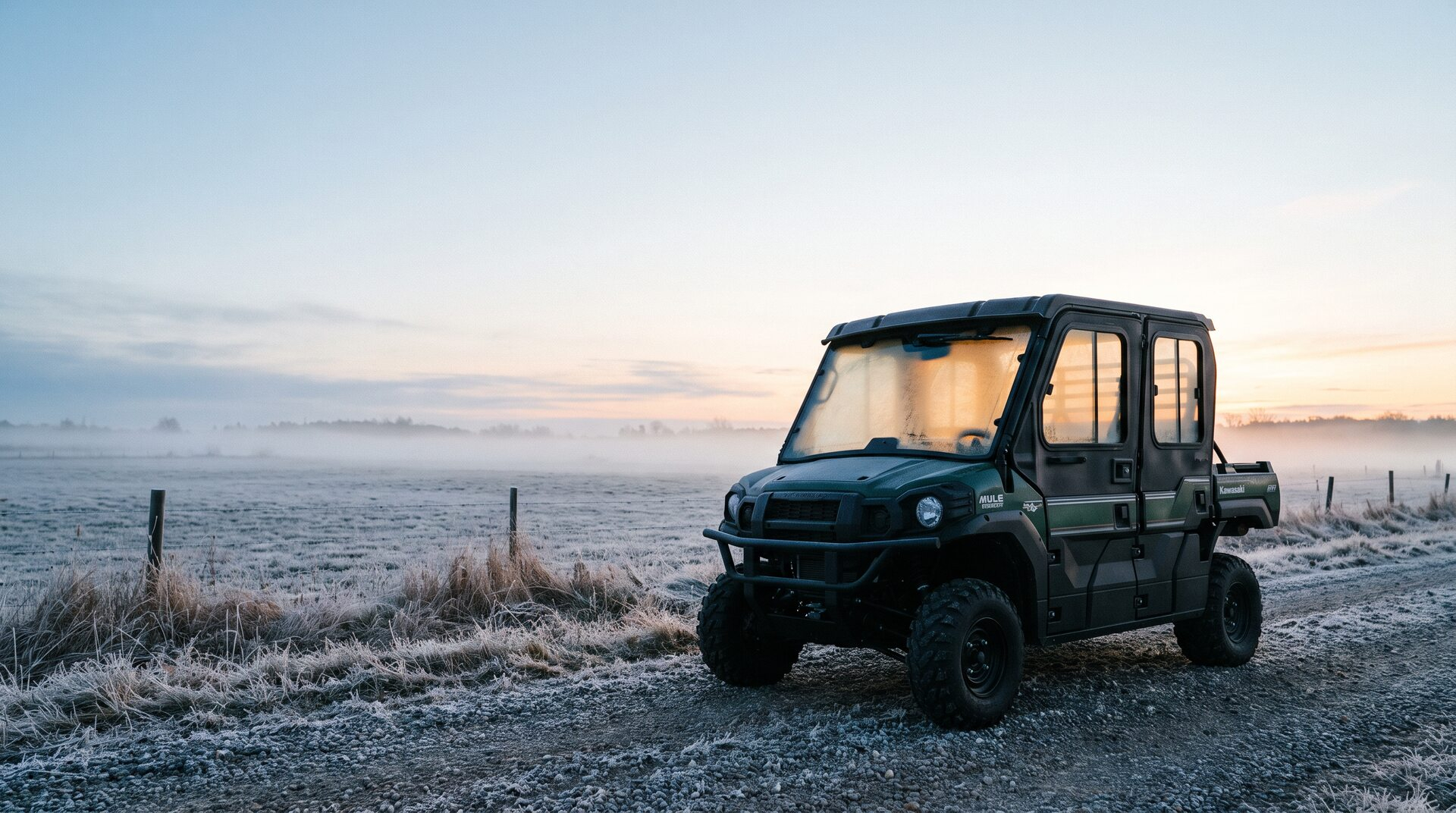
The first cold morning of the season has a way of changing how you feel about an open side-by-side. A machine that felt perfect in September suddenly delivers wind, damp, and spray straight to the driver and passenger. If you ride a Kawasaki side-by-side in the mountains of western North Carolina, you know how fast a pleasant fall ride turns into a chilly one once the sun drops behind the ridge.
Since 1970, Carolina Cycle has supplied genuine OEM parts to riders across the Southeast, and this page is for owners who want to ride longer as the temperatures fall. It covers the part categories that build weather protection around your Kawasaki side-by-side, how heat and defrost fit in, and how to keep the machine itself reliable in the cold. Because fitment varies by model and year, we describe categories here and point you to the catalog for your exact machine.
Why Weather Protection Matters as Temperatures Drop
Cold air is only part of the story. Wind chill on a moving machine, damp from morning fog, and spray from wet trails all work on you at once, and tired, chilled hands and feet make for slower reactions. Good protection keeps you comfortable, and it also keeps you alert on the trail, on the work site, or on the hunt.
Weather protection also shields the machine's cabin from the elements. Mud, rain, and cold wind hit the seats, the dash, and the controls too. A properly closed-in cab keeps more of that out, which means less cleanup and fewer cold-weather surprises. You can see what is available for your machine in our Kawasaki ATV parts catalog. Check the catalog for your model, and if you cannot find a side-by-side item, ask us and we will help you look.
Building Weather Protection in Layers
Most side-by-side owners do not go from open to fully enclosed in one step. Protection builds in layers, and each one solves a different problem. Think about how you ride, then add the layers that match.
Windshields
A windshield is usually the first addition, and it changes the ride more than you might expect. It deflects wind and debris from the driver and passenger, and it cuts the chill on cold mornings. Windshields come in different styles, so look at the part categories for your model, and keep clear, undamaged glass or panels in mind, since scratches and haze hurt visibility at dusk.
Roofs
A roof keeps rain, sleet, and falling leaves off you, and it adds a sense of shelter that makes a real difference on long rides. It also works as the anchor for other enclosure parts, so many owners add it before doors or a rear panel. Check the catalog for roof options that fit your model and year.
Doors and Side Protection
Doors close the largest gap in an open cab. They keep the wind from pushing in at your legs and help hold in the warmth you work to build. Depending on your model, door and side protection ranges from partial options to more complete ones. Look for the category that fits your machine, and confirm fit before you order.
Rear Panels and Full Cab Enclosures
A rear panel completes the shell, blocking the draft that pulls in behind the seats. Together, a windshield, roof, doors, and rear panel form a full cab enclosure. We do not claim a particular enclosure exists for every Kawasaki model, so check the catalog for your model. If you are unsure what your machine supports, tell us the model and year, and we will help you find out.
Heat and Defrost: Staying Warm and Seeing Clearly
An enclosed cab holds in your body heat, but it also holds in moisture. Fogged glass is a real safety problem, because you cannot drive what you cannot see. Warm air from a heat system helps with comfort and with defrosting at the same time, so many owners treat the two as a package.
Cab Heat
If your Kawasaki model supports a heat system, the catalog lists it under the parts for your machine. We do not claim a specific heater part exists for every model, so check the catalog for yours. Ask us if you do not see it, and we will help you find the right component or confirm what is available.
Defrost and Ventilation
Fog builds quickly when two people breathe in a closed cab on a cold, damp morning. Keep clean glass, wipe it with a soft cloth, and allow some air movement. Good ventilation also matters for safety. Never run an engine in a closed garage or other enclosed space, because exhaust gases are dangerous. Keep fresh air moving in the cab whenever you drive.
Keeping the Machine Reliable in the Cold
Weather protection helps you, but cold weather also tests the machine. Cold oil is thick, cold batteries have less to give, and cold rubber is stiff. A few checks before the first hard freeze keep the machine ready.
Battery and Starting
Cold mornings expose a tired battery first, so check the terminals for corrosion and have the battery tested. If your machine cranks slowly, check the terminals and connections first, then follow the starting guidance in your owner's manual. Replace a weak battery with a genuine one before the cold arrives.
Fluids, Coolant, and Filters
Check engine oil, coolant, and brake fluid against your owner's manual. Make sure the coolant mix suits cold weather per the manual, and replace any tired filters. Genuine filters and fluids built for your machine keep it running as designed through cold starts.
Tires, Brakes, and Lighting
Wet leaves and early frost make for slick trails, so check tread, brake pads, and brake fluid. Shorter days also mean more driving in low light, so confirm that your headlights and taillights work. Our guide to UTV headlights covers what to look for in lighting on a side-by-side.
Choosing the Right Parts for Your Kawasaki
Start with your exact model and year. Side-by-sides differ across the Kawasaki lineup, and an enclosure or heat part that fits one machine may not fit another. Decide how you use the machine, whether that is work, trail riding, or hunting, and build your protection in the order that solves your biggest problem first.
Genuine OEM parts are made to fit your machine, and that matters most for doors, panels, and anything that has to seal. For installation, your Kawasaki dealer is the right place to turn, since Carolina Cycle sells genuine parts online and does not install them. If you are not sure which part you need, send us your model and what you want to solve, and we will help you match it.
Frequently Asked Questions
Can I add a full cab enclosure to my Kawasaki side-by-side?
It depends on your model and year. Check the catalog for your machine, and if you do not see what you want, ask us. We will help you find out what fits.
Does my Kawasaki side-by-side have a factory heat option?
Some machines may, and some may not. Check the catalog for your model, and tell us your model and year if you want help confirming it.
What is the first weather protection upgrade to add?
Most owners start with a windshield, since it cuts wind and debris right away. A roof and doors usually follow, depending on how and where you ride.
How do I stop my windshield from fogging?
Keep the glass clean, keep some fresh air moving, and use your heat and defrost parts if your model has them. Fog builds fast in a closed cab, so ventilation matters.
Who installs these parts?
Carolina Cycle sells genuine OEM parts online. Your Kawasaki dealer or a qualified technician handles installation. Contact us through our support page if you need help identifying the right part.
Ride Warm Through the Cold Months
Cold weather does not have to end your season. Layer your protection to match how you ride, keep the glass clear, and give the machine the cold-weather checks it needs. Then you can keep working, hunting, and exploring well into winter.
When you are ready to find the right parts for your Kawasaki, contact our team through our OEM parts support page. We have helped riders since 1970, and we will help you match the genuine components to your machine.
