


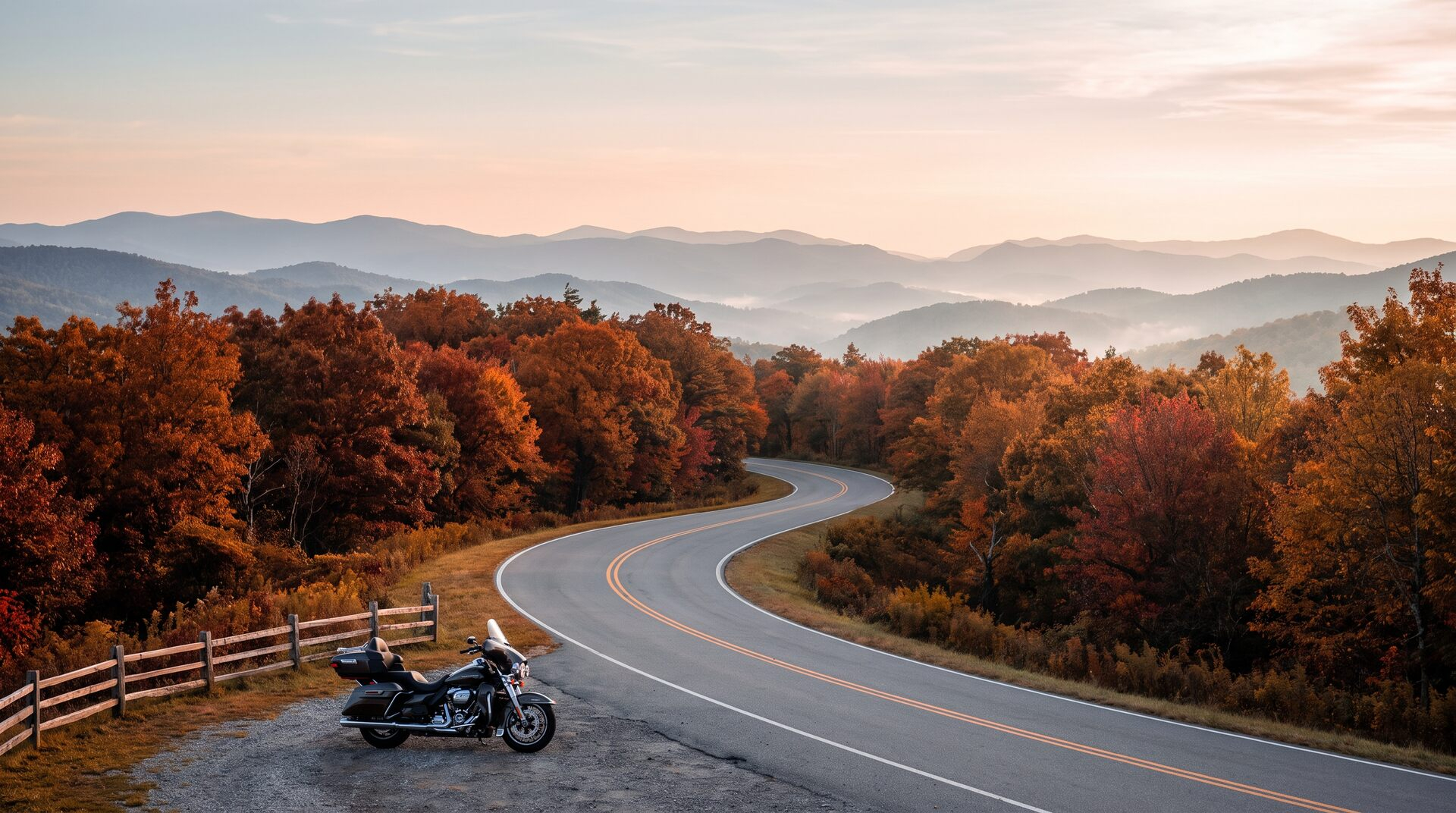
Ask ten riders for the best fall route in North Carolina and you will hear ten answers, but the smart ones all start with the same follow-up question: what kind of road do you want? A long, relaxed ridgetop cruise asks very different things of a motorcycle than a string of tight mountain curves, and both differ from a day of steady valley and foothill miles. Pick the road first, and the preparation list almost writes itself.
Carolina Cycle is an online store for genuine OEM parts. Our owners also run Waynesville Cycle Center, an in-person dealership and service center in Western North Carolina, in business since 1970. This page sorts North Carolina autumn riding into three road types and explains what each one asks of your bike: brakes, engine braking and cooling, tires, suspension, and lighting. Each section ends with a short parts focus, so you can spend your time and budget where the road will test you most.
Reading the Road: Three Types of Autumn Riding
Fall in the mountains changes more than the scenery. Mornings start cold, shaded corners stay damp, leaves collect where the road bends, and fog drifts into the low spots at dawn and dusk. A single loop can include all three road types below, so plan for each one.
Check Conditions Before You Ride
Fall road conditions can change quickly, and some roads close for weather, maintenance, or emergencies. Before you roll out, check current conditions for every road on your plan. For North Carolina highways, NCDOT's DriveNC site shows closures, weather incidents, and county road condition reports (NCDOT, DriveNC). Treat that check as part of your pre-ride routine, just like checking tire pressure.
High-Elevation Parkway Cruising
The Blue Ridge Parkway is the best-known example of this kind of riding. The National Park Service describes it as a slow-paced drive with long-range vistas, and it covers 469 miles across North Carolina and Virginia (National Park Service, Blue Ridge Parkway). The pace is relaxed, but the day is long, and that changes what your bike needs.
The Park Service notes that weather, road construction and maintenance, and emergency events can cause temporary closures, and it posts a status chart you should read before you ride (National Park Service, Blue Ridge Parkway road closures).
Cold Mornings and Tire Warm-Up
Steady Parkway miles do not heat tires the way spirited riding does, so cold rubber stays cold longer. Check pressure cold, use the figure in your owner's manual, and keep inputs smooth. Replace worn or aging tires before a long fall trip, not after.
Comfort, Suspension, and Wind Protection
Long hours at an even pace make seat comfort, wind protection, and sound suspension matter more than outright performance. A scratched windscreen scatters light at dusk, and worn suspension changes how the bike settles over broken pavement. Have your dealer inspect anything that feels loose or bouncy.
Parts Focus for the Parkway
Put tires, seat and windscreen condition, and lighting at the top of the list. You can browse genuine parts for your model in our Honda motorcycle parts catalog and Yamaha motorcycle parts catalog.
Tight Technical Mountain Curves
Some mountain roads never straighten out. Curve follows curve, grades rise and fall, and a missed line has little room to correct. This is where your bike works hardest, and where small neglected items make themselves known.
Brakes on Long Descents
A sustained descent asks your brakes to manage speed for minutes at a time, and that builds heat. Thin pads or old brake fluid can leave a lever that feels soft right when you need it. Use engine braking in a lower gear to share the load, and check your pads and fluid condition before the trip. Brake hydraulics are a job for your dealer or a qualified technician.
Engine Braking and Cooling on Climbs
Long climbs keep the engine under steady load with little airflow relief, and a marginal cooling system shows up in exactly that situation. Check coolant level and condition, look for leaks at hoses and clamps, and confirm the fan cycles as your manual describes. A clean radiator and fresh coolant keep temperatures steady all day.
Tires in Shaded Cold Corners
Shade changes the road. A corner that looks dry can hold cold dampness, frost, or wet leaves long after the sun has warmed the pavement. Slow down before a shaded corner rather than in it, and give the tires gentle, progressive inputs. Good tread depth and correct pressure give you the best chance of a calm ride through the unexpected.
Parts Focus for Technical Roads
Prioritize brake pads and fluid, coolant and cooling components, tires, and fork and shock condition. These parts carry the load on technical roads, and genuine parts for your model restore the performance your bike was built around. For a Suzuki, start in our Suzuki motorcycle parts catalog.
Long Valley and Foothill Runs
Valley and foothill roads stretch for miles through farmland and small towns. They are often the best all-day choice when the high country is cold or fogged in.
Miles Add Up: Fluids, Chains, and Filters
Steady riding racks up miles quickly, and the wear shows in the basics. Check oil and filter condition against your manual, look at the air filter, and inspect the chain, belt, or shaft as your model requires.
Fog and Early Dusk Lighting
Valleys collect fog on cool mornings, and autumn daylight fades earlier than most riders expect. Confirm that your headlight, taillight, brake light, and turn signals all work, and look at lenses for cracks, haze, or moisture. Being seen in flat light matters as much as seeing the road, and clean, intact lenses help on both counts.
Parts Focus for the Valley Run
Think routine items: oil and filters, drive components, battery condition, and lighting parts. A weak battery shows up on cold fall mornings. Our guide on OEM components for wet weather motorcycle riding covers parts that help when valley fog turns to drizzle.
Planning Your Autumn Mountain Riding Preparation
Match your checklist to your route. If your day covers all three road types, use the full list: tires, brakes, cooling, suspension, and lighting. If it covers only one, weight your time toward the systems that road tests hardest. Our fall color tour prep guide is a useful companion for the touring side of the trip.
Order parts early, so your dealer has time to install them before you leave. We ship across the country, so whether you live in the mountains or travel here to ride, we can help you find the right components for your model and year.
Frequently Asked Questions
What should I check first before a fall mountain ride?
Start with tires, brakes, and lighting. Cold temperatures, long descents, and early dusk all lean on those three systems, and each is easy to inspect.
How do I protect my brakes on a long descent?
Share the work with engine braking by dropping to a lower gear, and make sure your pads and brake fluid are in good condition before you go. Your owner's manual and your dealer can confirm what your model needs.
Why do shaded corners feel slippery in fall?
Shade keeps pavement cold and damp, and fallen leaves add to it. Slow down before the corner, keep your inputs smooth, and expect traction to change from sunny to shaded sections.
How do I check whether a road is open?
Look at current conditions before you leave. For the Blue Ridge Parkway, use the National Park Service road closures page, and for other North Carolina highways, use NCDOT's DriveNC site.
Can Carolina Cycle install parts on my bike?
No. We sell genuine OEM parts online, and your dealer handles installation and service. If you are not sure which part fits, contact us with your model and year and we will help you match it.
Ride the Mountains Ready
North Carolina's fall roads reward riders who think about the road ahead. Cruise the high country on good tires and clear lenses, take the tight curves with strong brakes and a healthy cooling system, and cover the valley miles with fresh fluids and reliable lighting. Check conditions before you leave, and the rest is the fun part.
When you are ready to line up parts for your fall trip, contact our team through our OEM parts support page. We have been supplying riders from the heart of the Blue Ridge since 1970, and we will help you choose the right genuine components for your bike.
