


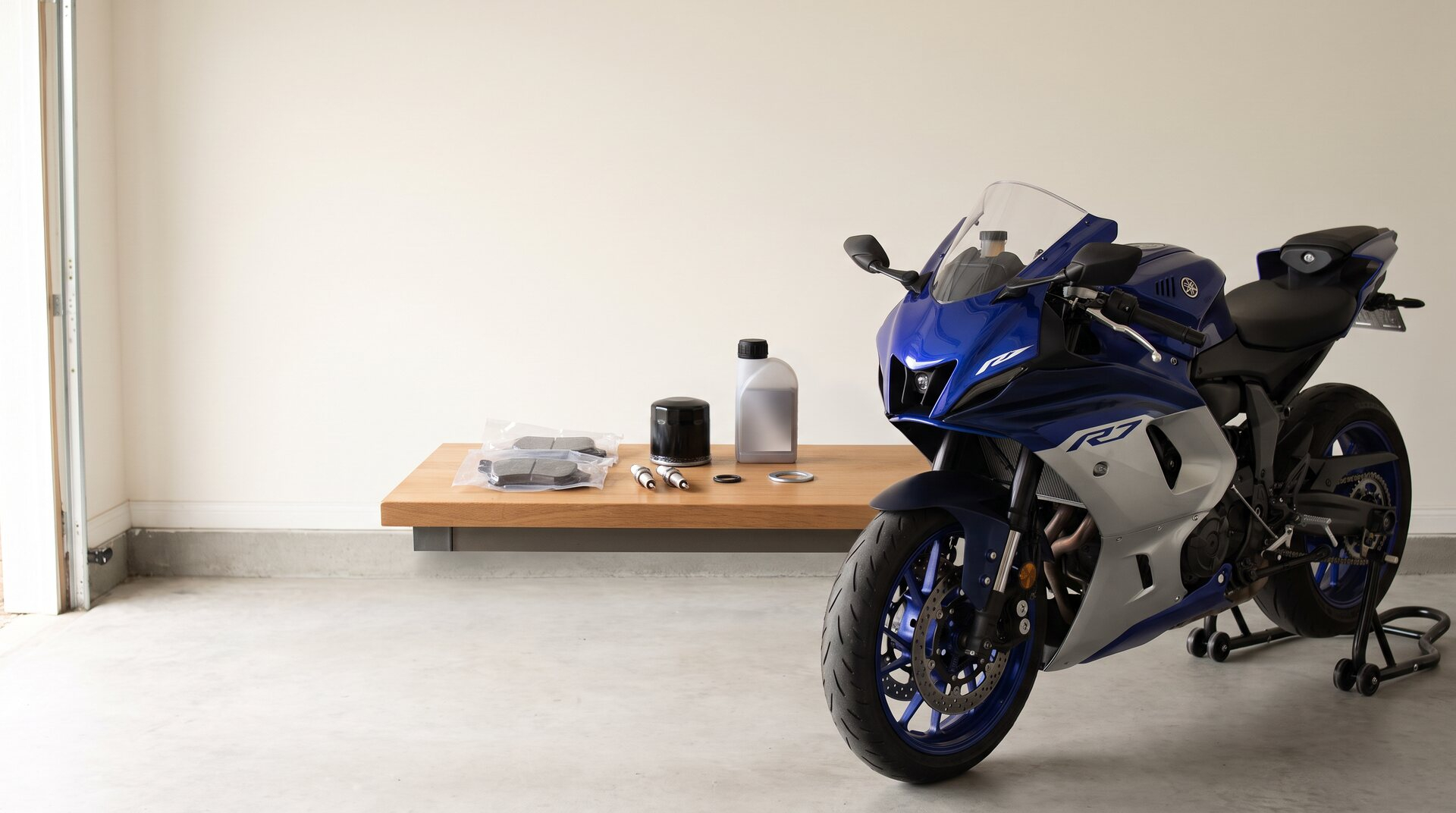
Most riders do not need a bigger shopping list this fall. They need the right one. A Yamaha that spent the summer on weekend rides has different needs than one that commuted every day, and both differ from a bike that is about to go under a cover until spring. Building a fall service kit around your own mileage and riding style keeps you from buying parts you do not need and from missing the ones you do.
Since 1970, Carolina Cycle has supplied genuine OEM parts to riders across the Southeast. This page shows you how to build a Yamaha fall service kit step by step: what goes into a basic kit, what an extended kit adds, what a bike heading into storage needs, how to choose among them, and which jobs suit a driveway and which belong at your dealer. We describe part categories rather than specific part numbers, because your exact model and your owner's manual decide the details.
Start with Your Mileage and Your Manual
Before you add anything to a cart, pull out your owner's manual and find the service schedule. Note the mileage or time since each item was last done, then compare it to the interval the manual lists for your model. That one comparison does most of the work, because it tells you which items are due, which are close, and which can wait.
Riding style fills in the rest. A rider who logs long highway miles wears tires and drive parts differently than one who makes short trips, and a bike that sees rain and gravel needs more attention than one that stays on dry pavement.
Three Kits, Three Situations
Think of fall service in three tiers. Pick the one that matches where your bike stands, and add pieces from the next tier only when your mileage or riding style calls for them.
The Basic Kit: Keep Riding Through Fall
The basic kit is for a bike that is in good shape and still on the road. It centers on the items that most directly affect how the engine runs and how you stop. That usually means fresh engine oil and a new oil filter, a look at the air filter, and a check of brake pads and brake fluid. Add the drain plug gasket or washer if your model uses one, since reusing a tired one invites a slow leak.
Check your tire tread and pressure at the same time, and make sure all lights work. If your manual lists spark plugs as due, include them.
The Extended Kit: High Miles or Hard Riding
Choose the extended kit when the summer was hard on the bike or the manual shows several items coming due. It builds on the basic kit and adds the wear items that high miles consume. Think coolant, brake pads and brake fluid together, spark plugs, and the final drive parts: chain and sprockets, or the belt or shaft service your model needs.
Add the battery to this tier if it is more than a few seasons old or the bike has started cranking slowly. Add cables, levers, and control parts that feel worn. An extended kit costs more time than the basic one, but it brings a bike with a lot of miles back to a reliable baseline for the cooler months.
The Storage Kit: Bound for Winter Rest
A bike going into storage needs a different kit, because the goal is to protect it while it sits. The oil and filter come first, since used oil holds contaminants that sit against engine parts all winter. Add fresh coolant if the manual says it is due, a battery that you will keep on a maintenance charger, and fuel treatment to protect the fuel system.
Include a good cover, and consider tire care and rodent and moisture protection for the months ahead. Do your replacements now, because the best time to order parts for spring is while the bike is still in front of you and you can see what is worn. When the weather warms, you ride instead of repair.
Choosing the Right Kit for You
Use a simple test. If the bike runs well and the manual shows only a few items due, build the basic kit. If you rode a lot or rode hard, or the manual shows many items due, build the extended kit. If the bike will sit for more than a couple of months, build the storage kit, and add whatever the manual shows as due.
A commuter with high mileage on a daily bike leans toward the extended kit. A weekend rider who covered few miles may find the basic kit is plenty. A rider who plans to wrap up the season in November and cover the bike can put the storage kit first. Ride in the rain? Our guide on riding your street bike in the rain covers what wet pavement asks of tires and brakes, which can move those items up your list.
Why Genuine Yamaha Components Belong in the Kit
A service kit is only as good as what goes into it. Genuine OEM filters, gaskets, brake components, and drive parts are made for your model, so they fit the way the factory intended. That matters most for pieces that seal or carry load, like gaskets and brake parts, where a near fit can cause a leak or a poor feel at the lever.
Our article on OEM components for wet weather motorcycle riding explains more about the parts that matter when conditions turn damp. Browse your model in our Yamaha motorcycle parts catalog, and tell us your model and year if you want help matching the right parts.
DIY or Professional: Who Does What
Many items in a fall kit suit a careful owner with the manual in hand. Changing oil and filters, replacing an air filter, checking tire pressure, swapping a spark plug, and cleaning and adjusting a chain are common driveway jobs.
Other jobs belong with your Yamaha dealer or a qualified technician. Brake hydraulics, bleeding or replacing brake fluid, wheel bearings, valve work, and anything involving wiring or fuel injection are in that group. Carolina Cycle sells genuine OEM parts online and does not install parts or service bikes. Your dealer handles the work, and we are glad to help you identify the right components first.
Frequently Asked Questions
What should a basic Yamaha fall service kit include?
Fresh oil and a new oil filter, a check of the air filter, brake pads and brake fluid, and a drain plug gasket or washer if your model uses one. Add spark plugs if the manual shows them due.
How do I know if I need the extended kit?
Look at your mileage since the last service and compare it to the manual's intervals. If several items are due, or the bike had a hard season, the extended kit makes sense.
What does a bike going into storage need?
A fresh oil and filter change, fuel treatment, a battery on a maintenance charger, and a quality cover. Add coolant or brake fluid if the manual says they are due.
Should I replace parts in fall or wait until spring?
Fall works well, since you can see what is worn and have time to order genuine parts without a rush. A bike that wakes up in spring with its work already done is ready on the first warm day.
Can Carolina Cycle service my bike?
No. We sell genuine OEM parts online, and your Yamaha dealer handles the service and installation. Contact us through our support page, and we will help you identify the right parts.
Build Your Kit and Ride Easy
A good fall service kit starts with your own mileage and your own riding style. Compare your manual's schedule to your bike's history, pick the basic, extended, or storage tier, and fill it with genuine components made for your model. Leave the hydraulics and the complex jobs to the professionals.
When you are ready to build your kit, contact our team through our OEM parts support page. We have helped Yamaha riders since 1970, and we will help you match the right parts to your motorcycle.
