


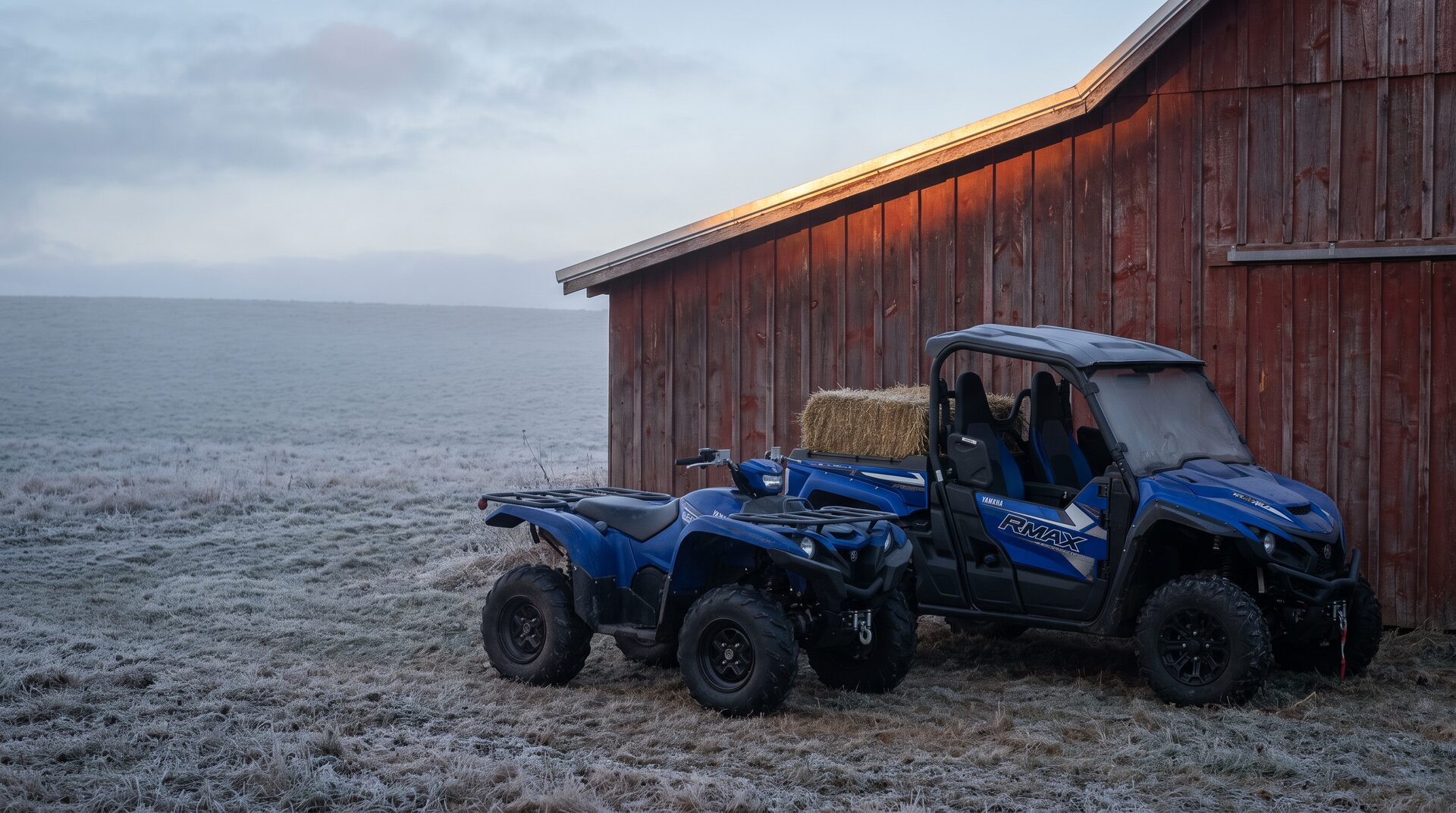
Work doesn't stop when the temperature drops. Hay still needs hauling, fence lines still need checking, and the road to the back field still needs driving. A Yamaha ATV or side-by-side that earns its keep in winter needs a different kind of attention than one that only sees summer trails, because cold changes how batteries, fluids, belts, and rubber behave.
Carolina Cycle sells genuine OEM parts online for Yamaha ATVs and side-by-sides. Our owners also run Waynesville Cycle Center, an in-person dealership and service center in Western North Carolina, in business since 1970. This page is built for owners who keep a machine working through winter. It covers cold starts, battery and charging, fluids, the CVT belt and drivetrain, brakes, tires, lighting, and the habits that make a cold-weather machine dependable. Your owner's manual decides the specifics for your model, so treat this as the checklist behind the manual.
Cold Starts and Warm-Up
Why Cold Starts Are Hard on the Machine
Cold thickens oil, slows a battery, and makes fuel harder to vaporize. All three show up at the moment you turn the key. A machine that starts easily at midday can labor at dawn, and repeated hard cranks wear the battery and the starter.
A Sensible Warm-Up Routine
Give the engine time to settle after it starts, and ease into the first minutes of work instead of loading it at once. Follow the warm-up advice in your manual, and listen for anything unusual. A rough, slow warm-up that gets worse over weeks is a sign to check the battery, plugs, and fuel before you're stranded.
Battery and Charging
The battery decides whether a cold morning starts well. Cold lowers what a battery can deliver, and a battery that was marginal in summer often fails in winter. Check the terminals for corrosion, make sure the cables are tight, and have the battery load tested if it's a few seasons old.
If the machine sits between jobs, a maintainer keeps the charge up. Side-by-sides run longer hours with more electrical load from lights and accessories, so watch the charging system on those. When a replacement is due, a genuine battery is made for your model's needs. Our article on choosing between OEM and aftermarket ATV parts explains why a battery and charging parts built for your model matter.
Fluids and Viscosity per the Manual
Engine Oil
Oil viscosity matters more in the cold. Your owner's manual lists the oil types and grades for different temperature ranges, so check it against the temperatures you actually work in. Use the oil and filter your manual calls for, and change them on schedule.
Coolant, Brake Fluid, and Drivetrain Fluids
Check coolant level and condition, since it must protect against the cold your area sees. Brake fluid absorbs moisture over time, and drivetrain fluids in the differentials and gearcase follow their own schedule. Look at each one in the manual and replace what's due. Fluid service on hydraulics belongs with your dealer.
CVT Belt and Drivetrain in the Cold
What Cold Does to the Belt
Many Yamaha ATVs and side-by-sides use a CVT, a belt-driven system that varies the drive ratio. In the cold, the belt and the surfaces it rides on are stiffer, and a belt that has been sitting can grab or slip at first. Warm the machine and ease on the throttle, rather than launching hard.
Inspecting and Protecting the System
Look at the belt for cracks, glazing, or uneven wear, and check that the CVT housing and intake are free of snow, ice, and debris. Water and snow in the housing can cause slipping. Your manual describes how to inspect the system and when to replace the belt, and your dealer can handle the work.
Driveline and Seals
Check boots, seals, and universal joints for splits and leaks. Cold makes rubber brittle, and a small tear can let in water and grit. Replace damaged parts with genuine components, and grease anything the manual says to lubricate.
Brakes
Winter work often means stopping on slick ground, so brake condition matters. Check pad thickness, rotor condition, and brake fluid, and make sure the levers and pedal feel firm. Wet brakes that freeze can behave oddly, so test them gently when you start.
Brake hydraulics are a dealer job. We supply genuine pads and parts, and we can help you identify the right ones for your machine.
Tires and Traction
Tires lose pressure as the temperature falls, so check them cold and set them to the figure in your manual. Look at tread depth, sidewall cracks, and age. Winter surfaces vary from frozen mud to packed snow, and tire categories differ in how they grip each one, so choose with your real use in mind and confirm fitment for your model. Our article on ATV mud season protection and recovery covers what thawing ground does to tires and wear parts.
Lighting
Check Every Light
Short days mean more dark hours at the controls. Test headlights, taillights, brake lights, and any auxiliary lights, and look at lenses for cracks or fog. Moisture inside a lens is a sign of a bad seal.
Keep It Visible
Wipe snow and mud off the lenses, and check that connectors are clean and snug. Corrosion on a connector can cause lights to flicker or fail, and genuine replacements fit as designed.
Cold-Weather Habits That Pay Off
Before You Head Out
Do a short walk-around: tires, lights, fluids, and anything that looks loose or leaking. Tell someone where you're going, and carry gear for the weather.
After the Work Is Done
Wash off mud and salt where you can, dry the machine, and park it somewhere sheltered. A machine put away clean is easier to start next time, and small problems show themselves early.
Frequently Asked Questions
How long should I warm up my Yamaha before working?
Follow your owner's manual. As a rule, let the engine settle before you load it, and ease into the first stretch.
How do I know my battery will last the winter?
Have it load tested before the cold arrives. A slow crank in autumn often means trouble in January.
Does cold affect the CVT belt?
It can. A cold belt is stiffer and may slip or grab at first, so warm up and start gently.
Should I change oil for winter?
Check the viscosity ranges in your manual for the temperatures you work in, and follow the schedule it lists.
Can Carolina Cycle do the service?
No. We sell genuine OEM parts online, and your Yamaha dealer handles service and installation.
Keep Your Yamaha Dependable All Winter
A cold-weather routine is mostly about the basics: a strong battery, the right fluids, a healthy belt, firm brakes, good tires, and working lights. Browse genuine components in our Yamaha ATV parts catalog, and tell us what you ride so we can help you find the right ones.
For help matching genuine parts to your machine, contact our team through our OEM parts support page.
